

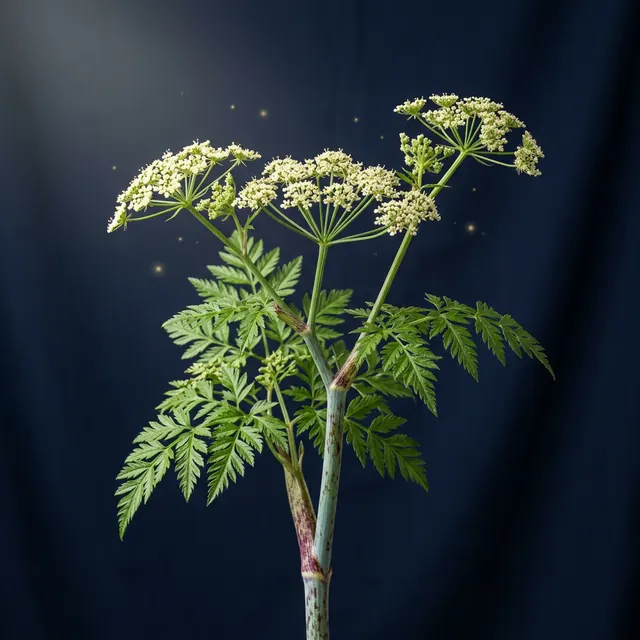
Poison hemlock
Conium maculatum L.
Polish folk names: cykuta
Symptoms of poisoning
Burning and numbness of the mouth, salivation, vomiting, diarrhoea, “heavy legs”, tremors, unsteady gait, then progressive paralysis of the muscles up to respiratory arrest; muscle breakdown and kidney failure are possible. In an adult, even about 5–8 g of the plant is dangerous.
What it looks like
Biennial plant, 0.5–2.5 m tall. Stem hollow, bluish-glaucous, with reddish or dirty-purple blotches at the base. Leaves 2–4 times pinnate, hairless, dark green. White flowers in compound umbels of 5–20 umbellets. When crushed it stinks of mouse urine.
What it is sometimes confused with
- parsley and garden chervil (leaves)
- horseradish, parsnip, parsley root (root)
- anise and fennel (fruits)
- wild carrot, tuberous chervil, other white umbellifers
The information is educational and describes traditional use according to EMA/HMPC monographs (the European Medicines Agency and its Committee on Herbal Medicinal Products).It does not replace the advice of a doctor or pharmacist. Never eat a plant you are not 100% sure you recognise.