

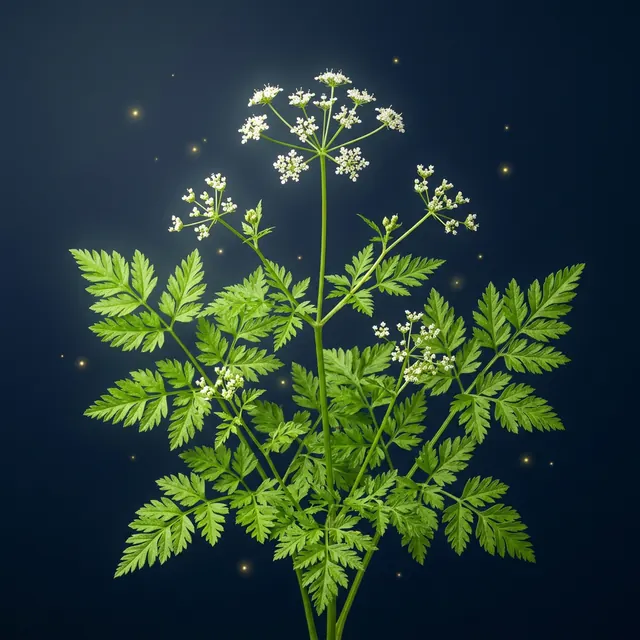
Garden chervil
Anthriscus cerefolium (L.) Hoffm.
Polish folk names: trybula
Traditional use
No EMA monograph. Chervil is above all a seasoning of French, Dutch and English cuisine. The herb contains an aromatic oil, carotene and vitamin C; it was traditionally believed to speed up digestion and ease flatulence. There are no clinical studies.
What it looks like
Annual, much-branched plant 50–70 cm tall. Leaves delicate, soft, light green, 2–3 times pinnate, resembling fine parsley. Flowers in May and June: tiny white flowers in small compound umbels of 2–6 rays. Fruits oblong, dark brown, with a beak. Root thin, spindle-shaped.
Harvest
Gathered: leaves (foliage).
When: April, May, June, September.
Form: kitchen (fresh foliage for soups, salads, fish, scrambled eggs), infusion.
Lookalikes
- Fool's parsley (“dog parsley”) – POISONOUS (coniine, cynapine); leaves shiny underneath, unpleasant garlic smell, one-sided bracteole leaflets hanging downwards beneath the umbels
- Poison hemlock – DEADLY POISONOUS; tall, stem bare, bluish, with purple blotches, smells of mice when crushed
- Cow parsley – common on meadows and roadsides, taller and thicker; not a seasoning
The information is educational and describes traditional use according to EMA/HMPC monographs (the European Medicines Agency and its Committee on Herbal Medicinal Products).It does not replace the advice of a doctor or pharmacist. Never eat a plant you are not 100% sure you recognise.