

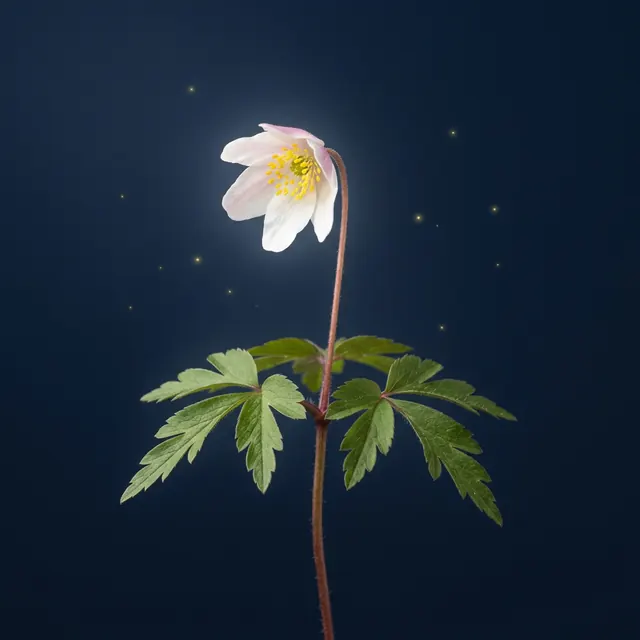
Wood anemone
Anemone nemorosa L.
Polish folk names: wietrznica, zawiłek, zajęczy maczek
Symptoms of poisoning
On the skin redness, swelling, burning pain and blisters. After eating, inflammation of the mucous membrane of the mouth, stomach and intestines, bloody diarrhoea, fainting, sometimes convulsions; kidney damage is possible.
What it looks like
Low perennial, 10–20 cm, forming white carpets in deciduous forests in spring. At the top of the stem a whorl of 3 palmately divided leaves on stalks 1–3 cm long, above it a single flower with 6–8 white tepals, often pinkish beneath, and yellow stamens. Rhizome horizontal, brown.
What it is sometimes confused with
- yellow wood anemone (also poisonous)
- young leaves of plants collected in spring in deciduous forests (a warning based on the appearance of the rosettes)
The information is educational and describes traditional use according to EMA/HMPC monographs (the European Medicines Agency and its Committee on Herbal Medicinal Products).It does not replace the advice of a doctor or pharmacist. Never eat a plant you are not 100% sure you recognise.