

Kava
Piper methysticum G.Forst.
Polish folk names: kawa-kawa, awa, yaqona, sakau
Traditional use
On the islands of the Pacific, a ceremonial drink is prepared from the kava root, which is used to welcome guests, make peace and open councils. Kavalactones have a calming and relaxing effect. In the recipes of old books of Polynesia, kava appears only as a historical description. How it works, what risks it carries and what the law says, we describe in the Plants of Power section.
What it looks like
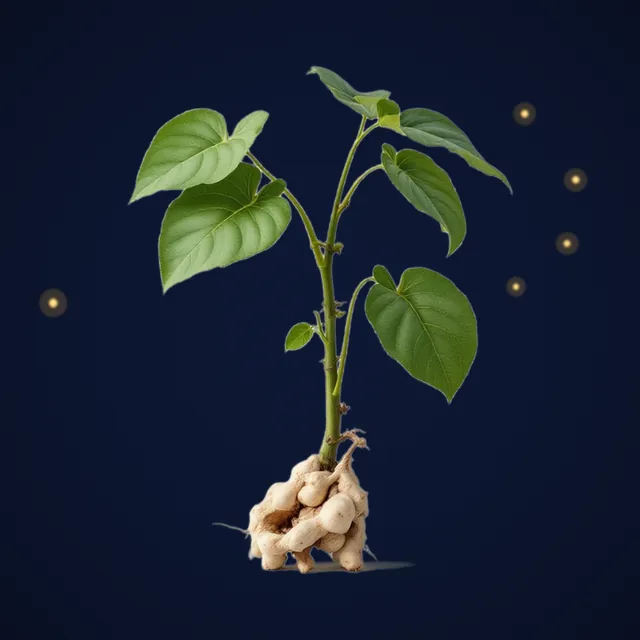
A shrub 2–4 m tall with green or dark-spotted shoots with thick nodes. Leaves large, heart-shaped, with 9–13 veins from the base. Rootstock thick, knobbly, with a tuft of side roots. The plant sets no seed and is propagated from cuttings.
Harvest
Gathered: rhizome and roots.
Form: ceremonial drink (historical description).
Lookalikes
- kawakawa (Piper excelsum) – a New Zealand relative that does not intoxicate
- betel pepper – a climber with glossy leaves
The information is educational and describes traditional use according to EMA/HMPC monographs (the European Medicines Agency and its Committee on Herbal Medicinal Products).It does not replace the advice of a doctor or pharmacist. Never eat a plant you are not 100% sure you recognise.