

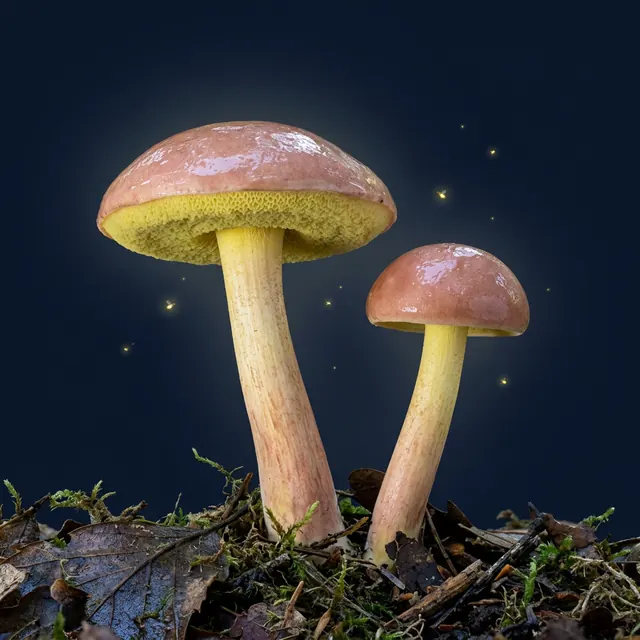
Aureoboletus gentilis
Aureoboletus gentilis
Polish folk names: złotak drobny, podgrzybek złotopory
How to recognise
- Cap up to 7 cm, smooth, light pink, beige or brown, clearly sticky in damp weather.
- Tubes and pores light yellow, do not change colour when pressed.
- Stem cylindrical, narrowed towards the base, yellow, fading downwards, pink or brown in places.
- Flesh whitish or cream, pink under the skin, wine-red at the stem base; does not change colour.
Where and when it grows
Deciduous forests, on the ground, mainly under oaks and beeches, readily on calcareous soils. From June to October; very rare in Poland.
JanFebMarAprMayJunJulAugSepOctNovDec
Most often under: oak, beech.
Beware of the lookalike
Other small boletes. The złotoborowik has a distinctly sticky, pinkish cap, pale yellow pores and flesh that do not turn blue; under the skin the flesh is always slightly pink.
In the kitchen
Edible, but dying out in Poland. Leave it in the forest and enjoy the sight.
Good to know
On the Red List of Plants and Fungi of Poland it has status E (endangered). Although edible, it should not be collected.
Frequently asked questions
Is aureoboletus gentilis edible?
Yes, aureoboletus gentilis is an edible mushroom.
When does aureoboletus gentilis grow?
June – October. Deciduous forests, on the ground, mainly under oaks and beeches, readily on calcareous soils. From June to October; very rare in Poland.
Aureoboletus gentilis: what is it easily confused with?
Most often with the species Other small boletes. The złotoborowik has a distinctly sticky, pinkish cap, pale yellow pores and flesh that do not turn blue; under the skin the flesh is always slightly pink.