

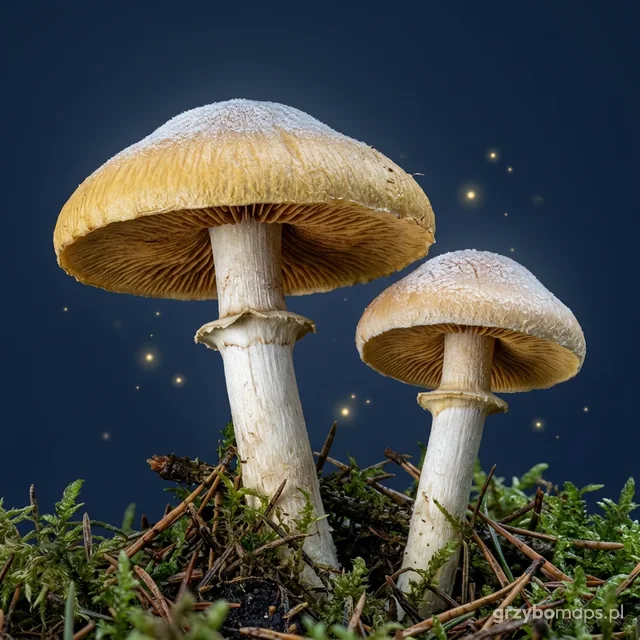
The gypsy
Cortinarius caperatus
Polish folk names: płachetka kołpakowata, kołpak, turek, niemka, bydlarka
How to recognise
- Cap 4–12 cm, straw-yellow to ochre, with a whitish, frosted-looking bloom on top, often radially wrinkled.
- Stem whitish, with a distinct membranous ring, sometimes remnants of the veil at the base.
- Gills clay-yellow, then rusty-brown; spore print rusty-brown.
- Flesh whitish, taste mild.
Up close
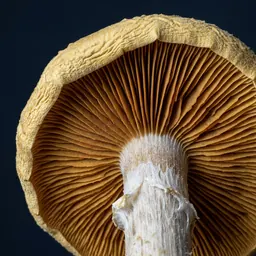 rdzawe blaszki
Underside of the cap
Gills clay-yellow, then rusty-brown.
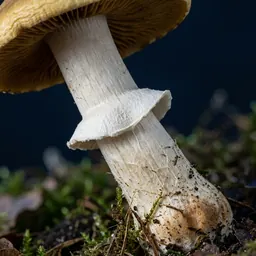 ring
Stem
Stem whitish, with a distinct membranous ring.
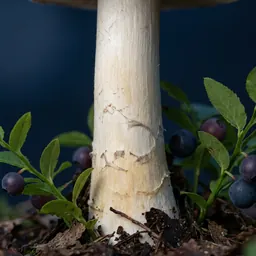 veil remnants
Base of the stem
Sometimes veil remnants at the base, but no sac-like volva.
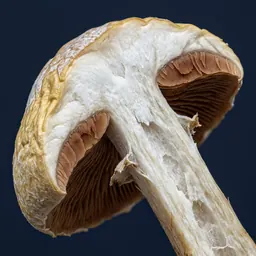 whitish
Cross-section
Flesh whitish, taste mild.
The close-ups are AI illustrations. Any doubt is settled by a mycologist or herbalist, not by a photo.
Where and when it grows
Coniferous and mixed forests on acidic soils, often in masses among bilberries; from August to October.
JanFebMarAprMayJunJulAugSepOctNovDec
Most often under: pine, spruce, beech; often among bilberries.
Beware of the lookalike
Fool's webcap. Webcaps have only a delicate cobweb-like veil, not a membranous ring; the fool's webcap is rusty-orange. The gypsy has a persistent, membranous ring and a hoary bloom on the cap.
In the kitchen
Good fried, stewed and in soups; also suitable for pickling. The stems can be fibrous.
Good to know
Often wormy – check the fruiting bodies carefully. Collect only specimens with a distinct membranous ring.
Where in Poland
Most records in the GBIF database: pomorskie, zachodniopomorskie, świętokrzyskie, podlaskie, wielkopolskie.
Frequently asked questions
Is the gypsy edible?
Yes, the gypsy is an edible mushroom.
When does the gypsy grow?
August – October. Coniferous and mixed forests on acidic soils, often in masses among bilberries; from August to October.
The gypsy: what is it easily confused with?
Most often with the species Fool's webcap. Webcaps have only a delicate cobweb-like veil, not a membranous ring; the fool's webcap is rusty-orange. The gypsy has a persistent, membranous ring and a hoary bloom on the cap.
Where in Poland does the gypsy grow?
Most records (GBIF): pomorskie, zachodniopomorskie, świętokrzyskie, podlaskie, wielkopolskie. Most often under: pine, spruce, beech; often among bilberries.