

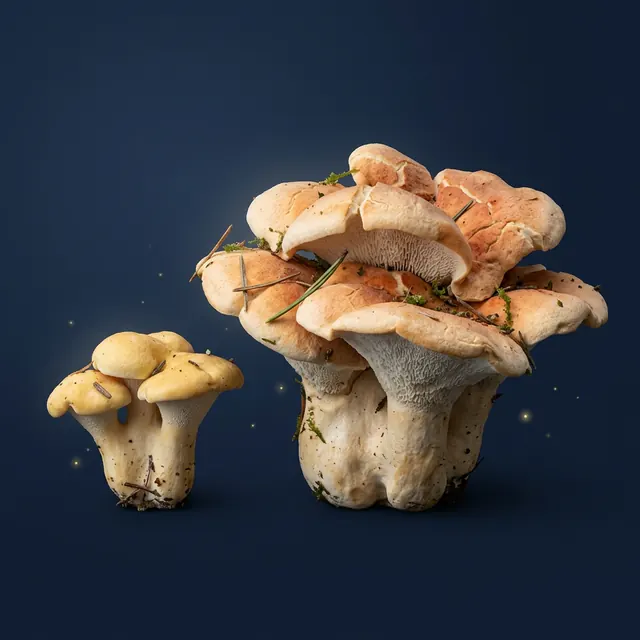
Albatrellopsis confluens
Albatrellopsis confluens (syn. Albatrellus confluens)
Polish folk names: bielaczek pozrastany, żagiew zlewająca się, huba połyskująca, bułczak
How to recognise
- Caps 3–15 cm, cream, apricot, sometimes orange to reddish-brown, petal-like; fused into clumps up to 50 cm.
- Tubes up to 3 mm, white, running down the stem; pores very small, round.
- Stem 3–6 cm tall and 2–2.5 cm thick, short, white with apricot spots, often lateral.
- Flesh fleshy, cream; smell faint, taste slightly bitter.
Up close
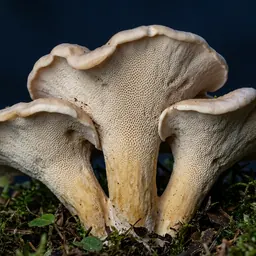 white pores
Underside of the cap
White, very small, round pores running down the stem.
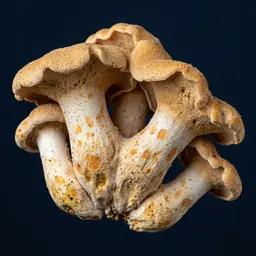 fused together
Stem
Short, white stems, often lateral and fused with one another.
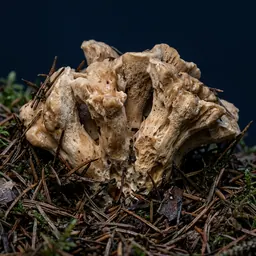 clump
Base of the stem
The fruiting bodies grow from the ground in clumps up to 30–50 cm wide.
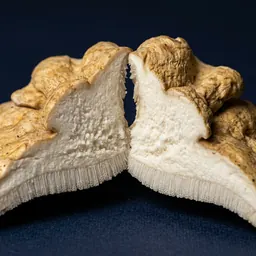 cream-coloured flesh
Cross-section
Flesh fleshy, cream-coloured; taste slightly bitter.
The close-ups are AI illustrations. Any doubt is settled by a mycologist or herbalist, not by a photo.
Where and when it grows
Coniferous and mixed pine forests, most often mountain spruce forests, on the ground singly or in clumps. From June to October. Fairly rare in Poland, status E.
JanFebMarAprMayJunJulAugSepOctNovDec
Most often under: spruce, fir (mountain forests).
Beware of the lookalike
Sheep polypore. Naziemek białawy is pale, does not grow in fused clumps, and its pores turn yellow.
In the kitchen
Only young fruiting bodies are edible, older ones are bitter. A threatened species – do not collect it.
Frequently asked questions
Is albatrellopsis confluens edible?
Warunkowo. It requires proper preparation.
When does albatrellopsis confluens grow?
June – October. Coniferous and mixed pine forests, most often mountain spruce forests, on the ground singly or in clumps. From June to October. Fairly rare in Poland, status E.
Albatrellopsis confluens: what is it easily confused with?
Most often with the species Sheep polypore. Naziemek białawy is pale, does not grow in fused clumps, and its pores turn yellow.