

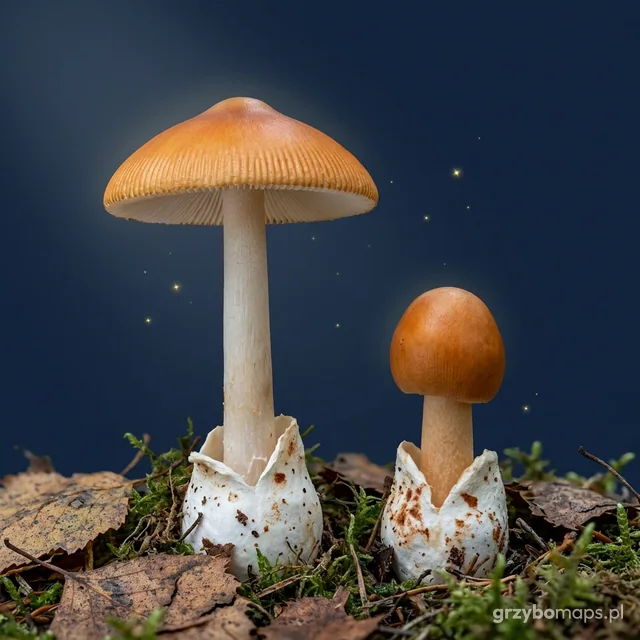
Tawny grisette
Amanita fulva
Polish folk names: panienka
How to recognise
- Cap orange-brown to rusty, with a bump and a strongly striate edge.
- Stem slender, brittle, without a ring.
- At the base a loose, sac-like, white volva with rusty spots.
- Gills white, free.
Up close
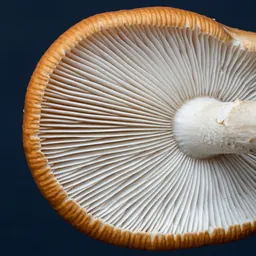 white gills
Underside of the cap
Gills white, free; the cap edge strongly striate.
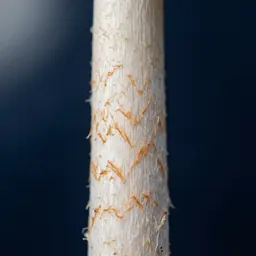 no ring
Stem
Stem slender, brittle, without a ring.
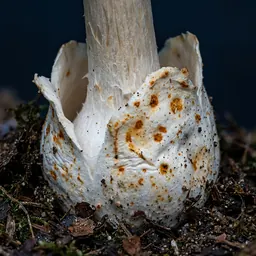 pochwa
Base of the stem
At the base a loose, sac-like, white volva with rusty spots. Always twist out the whole mushroom.
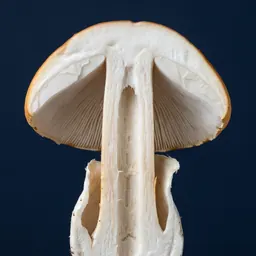 white flesh
Cross-section
Flesh white, thin, brittle, does not change colour.
The close-ups are AI illustrations. Any doubt is settled by a mycologist or herbalist, not by a photo.
Where and when it grows
Common in damp forests, often under birches and spruces, also on peat bogs; from June to October.
JanFebMarAprMayJunJulAugSepOctNovDec
Most often under: birch, spruce, pine, beech.
Beware of the lookalike
Panther cap. The panther cap has white warts on the cap and a ring on the stem. The tawny grisette has no ring, and the cap is usually smooth.
In the kitchen
Only the caps of reliably identified specimens, thoroughly boiled (about 15 min) before frying; never raw.
Good to know
Edible only after cooking (harmful raw). Most Polish atlases advise against collecting it, because the volva at the base also occurs in deadly poisonous amanitas.
Where in Poland
Most records in the GBIF database: łódzkie, zachodniopomorskie, dolnośląskie, mazowieckie, pomorskie.
Frequently asked questions
Is tawny grisette edible?
Warunkowo. Edible only after cooking (harmful raw). Most Polish atlases advise against collecting it, because the volva at the base also occurs in deadly poisonous amanitas.
When does tawny grisette grow?
June – October. Common in damp forests, often under birches and spruces, also on peat bogs; from June to October.
Tawny grisette: what is it easily confused with?
Most often with the species Panther cap. The panther cap has white warts on the cap and a ring on the stem. The tawny grisette has no ring, and the cap is usually smooth.
Where in Poland does tawny grisette grow?
Most records (GBIF): łódzkie, zachodniopomorskie, dolnośląskie, mazowieckie, pomorskie. Most often under: birch, spruce, pine, beech.