

Butter bolete
Butyriboletus appendiculatus
Polish folk names: borowik żółtobrązowy, borowik przyczepkowy
How to recognise
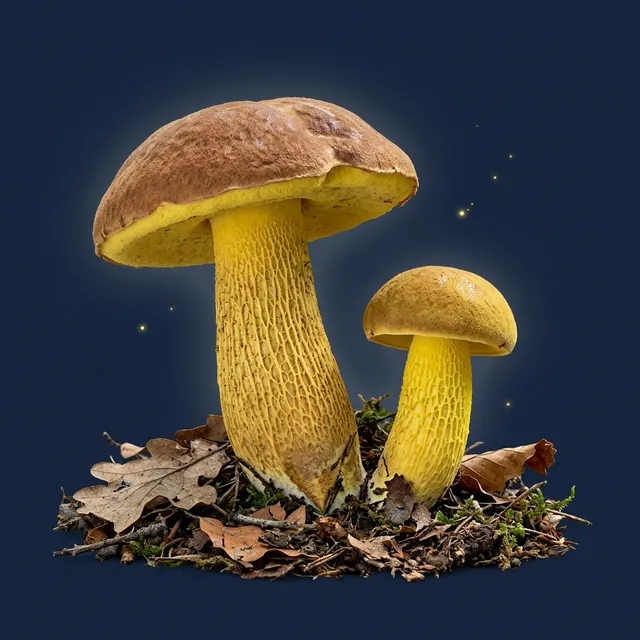
- Cap 6–15 cm, brown to yellow-brown, sometimes with a pinkish tinge, felty when young, cracks in drought.
- Pores bright yellow (butter-yellow), sometimes turn slightly blue when damaged.
- Stem 5–15 cm tall and 2–6 cm thick, chrome-yellow, with wine-red dots below, with a yellow net in the upper half, ending in a root-like point.
- Flesh yellow, compact, turns slightly blue above the tubes.
Where and when it grows
Warm deciduous forests under oaks and beeches, less often under firs, on calcareous soils. From summer to autumn; rare in Poland.
JanFebMarAprMayJunJulAugSepOctNovDec
Most often under: oak, beech; less often fir (calcareous soils).
Beware of the lookalike
Penny bun. The penny bun has white or olive pores, a pale stem with a white net and white flesh that does not turn blue.
In the kitchen
Edible and tasty, but rare and endangered in Poland – better to leave it in the forest. If you do collect it, use it in soups, sauces and stewed dishes.
Good to know
On the Red List of Plants and Fungi of Poland it has status V (vulnerable to extinction). Strict protection covers the related masłoborowik królewski, not this species.
Frequently asked questions
Is butter bolete edible?
Yes, butter bolete is an edible mushroom.
When does butter bolete grow?
July – October. Warm deciduous forests under oaks and beeches, less often under firs, on calcareous soils. From summer to autumn; rare in Poland.
Butter bolete: what is it easily confused with?
Most often with the species Penny bun. The penny bun has white or olive pores, a pale stem with a white net and white flesh that does not turn blue.