

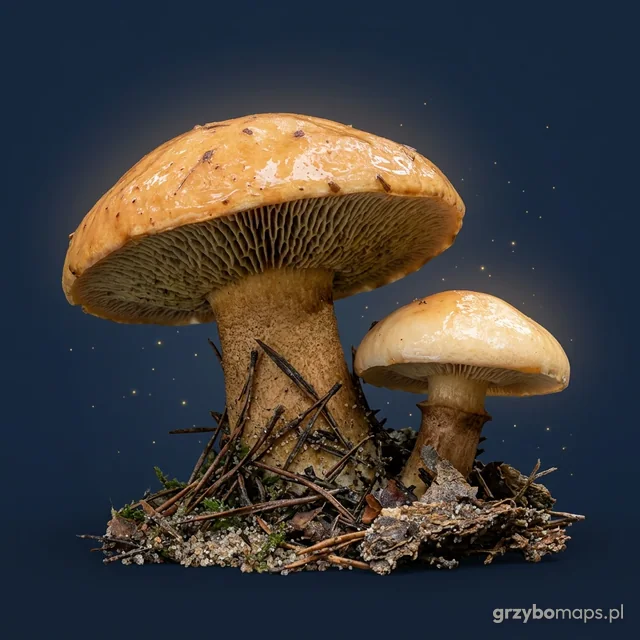
Bovine bolete
Suillus bovinus
Polish folk names: sitarz, sitacz
How to recognise
- Cap 4–12 cm, cream to ochre-orange, slippery in wet weather.
- Pores very large, angular, compound – like a sieve.
- Stem short, without a ring.
- Flesh rubbery; after cooking or drying it turns pink-violet.
Up close
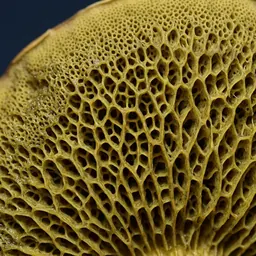 pores like a sieve
Underside of the cap
Pores very large, angular, compound – like a sieve.
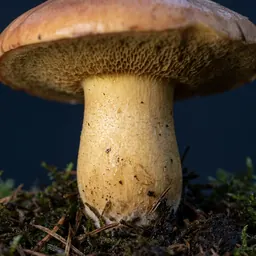 no ring
Stem
Stem short, smooth, the colour of the cap, without a ring.
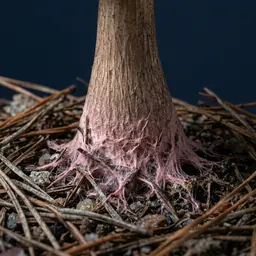 small clusters under pine
Base of the stem
Base narrowed, pinkish mycelium; often grows in small clusters under pine.
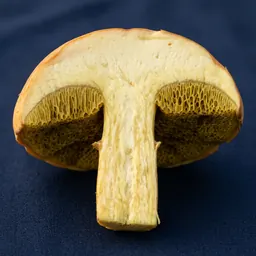 gumowaty
Cross-section
Flesh pale yellow, rubbery, does not turn blue.
The close-ups are AI illustrations. Any doubt is settled by a mycologist or herbalist, not by a photo.
Where and when it grows
Very common in dry pine forests on sands, often among heather. From July to October.
JanFebMarAprMayJunJulAugSepOctNovDec
Most often under: sosna.
Beware of the lookalike
Brown roll-rim. The bovine bolete is sometimes popularly called ‘krowiak’ in Polish, but the real brown roll-rim (poisonous) has gills under the cap, not tubes, and an inrolled margin.
In the kitchen
Medium quality: for soups, sauces and pickles; turns dark purple-pink when cooked, which is not harmful.
Where in Poland
Most records in the GBIF database: pomorskie, wielkopolskie, małopolskie, mazowieckie, śląskie.
Frequently asked questions
Is bovine bolete edible?
Yes, bovine bolete is an edible mushroom.
When does bovine bolete grow?
July – October. Very common in dry pine forests on sands, often among heather. From July to October.
Bovine bolete: what is it easily confused with?
Most often with the species Brown roll-rim. The bovine bolete is sometimes popularly called ‘krowiak’ in Polish, but the real brown roll-rim (poisonous) has gills under the cap, not tubes, and an inrolled margin.
Where in Poland does bovine bolete grow?
Most records (GBIF): pomorskie, wielkopolskie, małopolskie, mazowieckie, śląskie. Most often under: sosna.