

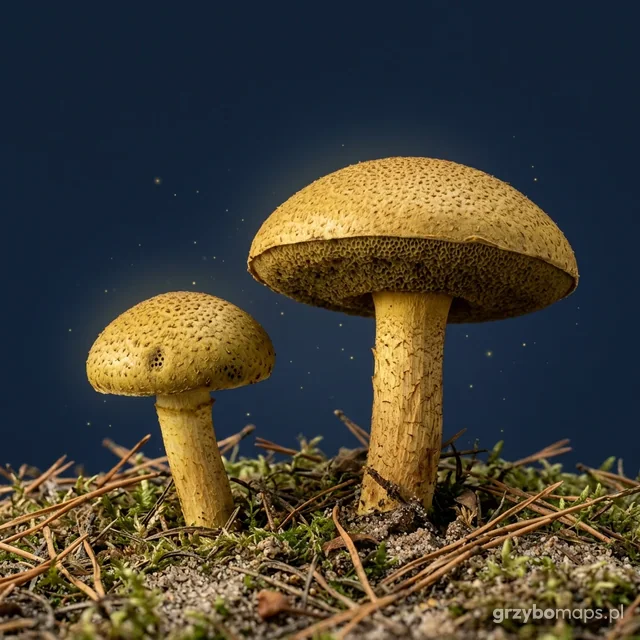
Velvet bolete
Suillus variegatus
Polish folk names: murzynek
How to recognise
- Cap olive-yellow to ochre, dry, covered with fine scales (mottled); slippery only after rain.
- Pores small, olive-brown.
- Stem yellowish, without a ring.
- Flesh pale yellow, turns slightly blue when cut.
Up close
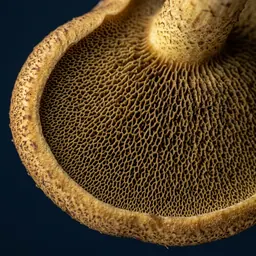 drobne pory
Underside of the cap
Pores fine, olive-brown to cinnamon.
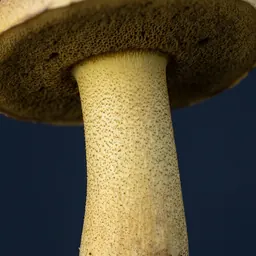 no ring
Stem
Stem yellowish, smooth, without a ring.
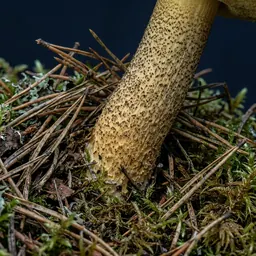 under pine
Base of the stem
Base without a volva; grows in pine forests.
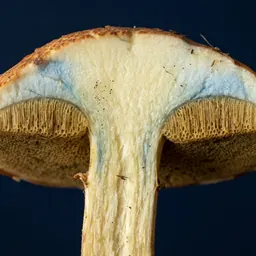 lekko sinieje
Cross-section
Flesh pale yellow, turns slightly blue when cut.
The close-ups are AI illustrations. Any doubt is settled by a mycologist or herbalist, not by a photo.
Where and when it grows
Only under pines, mainly in forests on sandy soils. From July to October.
JanFebMarAprMayJunJulAugSepOctNovDec
Most often under: sosna.
Beware of the lookalike
Peppery bolete. The peppery bolete is clearly smaller, has rusty-copper pores and a burning taste; the velvet bolete is larger and mild.
In the kitchen
For soups, sauces and pickles; can be dried.
Where in Poland
Most records in the GBIF database: pomorskie, wielkopolskie, zachodniopomorskie, lubuskie, mazowieckie.
Frequently asked questions
Is velvet bolete edible?
Yes, velvet bolete is an edible mushroom.
When does velvet bolete grow?
July – October. Only under pines, mainly in forests on sandy soils. From July to October.
Velvet bolete: what is it easily confused with?
Most often with the species Peppery bolete. The peppery bolete is clearly smaller, has rusty-copper pores and a burning taste; the velvet bolete is larger and mild.
Where in Poland does velvet bolete grow?
Most records (GBIF): pomorskie, wielkopolskie, zachodniopomorskie, lubuskie, mazowieckie. Most often under: sosna.