

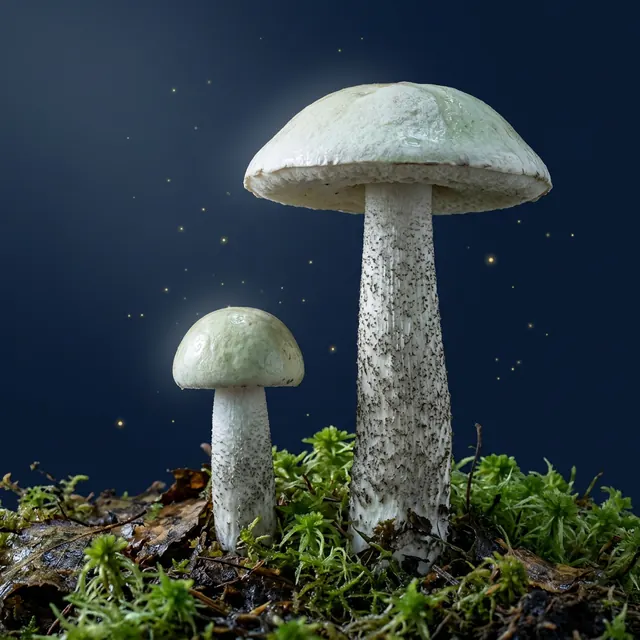
Ghost bolete
Leccinum holopus
Polish folk names: koźlarz beżowy
How to recognise
- Cap 3–15 cm, white or whitish, with a buff, greyish or greenish tinge with age.
- Tubes whitish, turn brown when pressed.
- Stem whitish, covered with white or grey scales that darken with age.
- Flesh white, usually turns slightly pink, sometimes bluish at the stem base.
Where and when it grows
Under birches in wet areas and peat bogs, often among peat mosses. From July to October; rarely recorded in Poland.
JanFebMarAprMayJunJulAugSepOctNovDec
Most often under: birch (wetlands, peat bogs, sphagnum moss).
Beware of the lookalike
Brown birch bolete. The brown birch bolete has a brown cap. Only its albino forms can look similar; the ghost bolete grows in boggy places.
In the kitchen
Edible, but soft and bland. Collect young fruiting bodies and fry them briefly in butter.
Good to know
The Critical List of Fungi of Poland gives no sites, but the species is found in Poland (e.g. Kashubia, the Milicz area).
Frequently asked questions
Is ghost bolete edible?
Yes, ghost bolete is an edible mushroom.
When does ghost bolete grow?
July – October. Under birches in wet areas and peat bogs, often among peat mosses. From July to October; rarely recorded in Poland.
Ghost bolete: what is it easily confused with?
Most often with the species Brown birch bolete. The brown birch bolete has a brown cap. Only its albino forms can look similar; the ghost bolete grows in boggy places.