

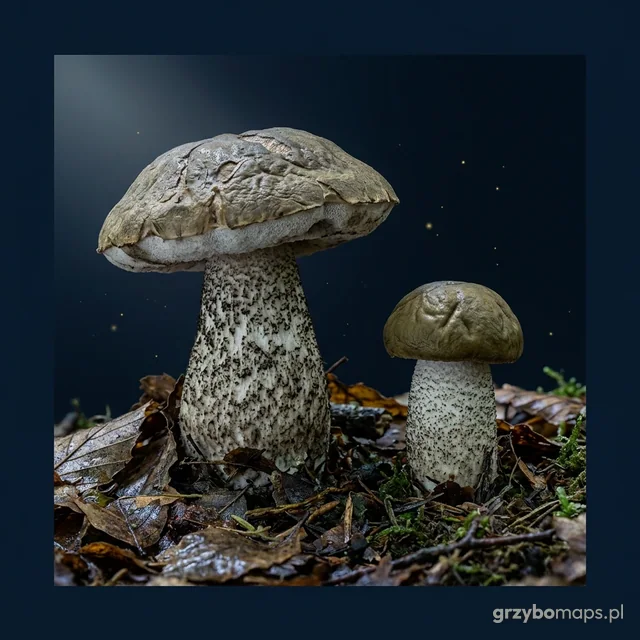
Hazel bolete
Leccinellum pseudoscabrum
Polish folk names: hornbeam bolete, kozak grabowy
How to recognise
- Cap grey-brown to olive-brown, uneven, wrinkled, often cracked.
- Tubes whitish, then greyish.
- Stem whitish, densely covered with dark scales.
- Flesh pink-grey when cut, then grey-violet and black.
Up close
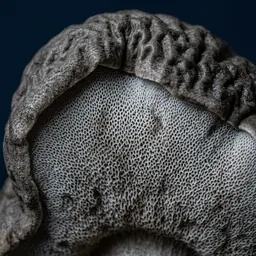 rurki
Underside of the cap
Pores fine, whitish, then greyish.
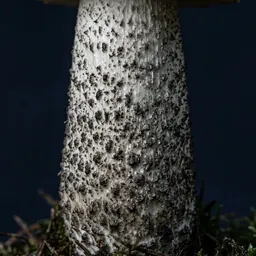 dark scales
Stem
Stem whitish, densely covered with dark scales.
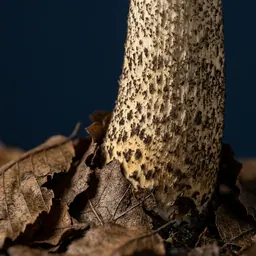 pod grabem
Base of the stem
Base without a volva; grows under hornbeams and hazel.
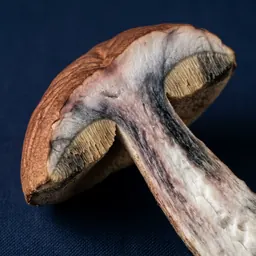 czernieje
Cross-section
Flesh pink-grey when cut, then grey-violet and black.
The close-ups are AI illustrations. Any doubt is settled by a mycologist or herbalist, not by a photo.
Where and when it grows
Under hornbeams (sometimes hazel), in damp oak-hornbeam forests and parks. From June to October.
JanFebMarAprMayJunJulAugSepOctNovDec
Most often under: hornbeam, hazel.
Beware of the lookalike
Brown birch bolete. The brown birch bolete grows under birches, has a smooth cap and flesh that hardly changes colour. The hazel bolete grows under hornbeams, and its flesh turns grey-violet and then black. Both are edible.
In the kitchen
Cook or fry well; it darkens after cooking. The tough, fibrous stems of older specimens are better discarded.
Where in Poland
Most records in the GBIF database: wielkopolskie, lubelskie, małopolskie, pomorskie, świętokrzyskie.
Frequently asked questions
Is hazel bolete edible?
Yes, hazel bolete is an edible mushroom.
When does hazel bolete grow?
June – October. Under hornbeams (sometimes hazel), in damp oak-hornbeam forests and parks. From June to October.
Hazel bolete: what is it easily confused with?
Most often with the species Brown birch bolete. The brown birch bolete grows under birches, has a smooth cap and flesh that hardly changes colour. The hazel bolete grows under hornbeams, and its flesh turns grey-violet and then black. Both are edible.
Where in Poland does hazel bolete grow?
Most records (GBIF): wielkopolskie, lubelskie, małopolskie, pomorskie, świętokrzyskie. Most often under: hornbeam, hazel.