

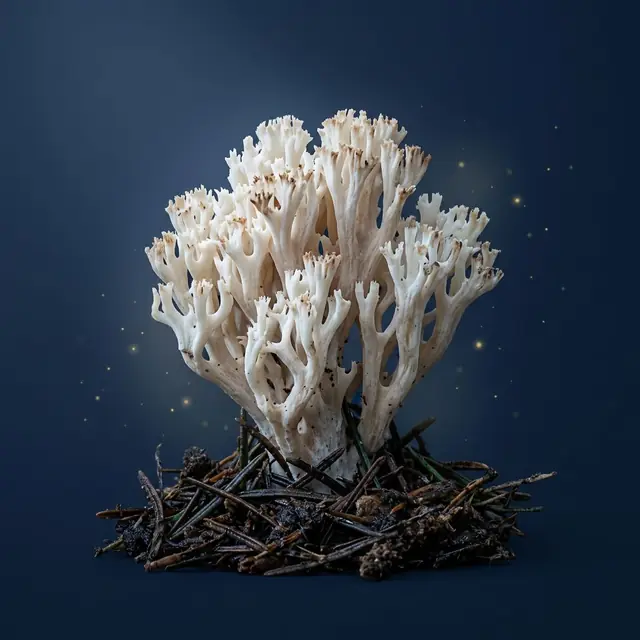
Crested coral
Clavulina coralloides (syn. Clavulina cristata)
Polish folk names: goździeńczyk
How to recognise
- Bushy fruiting body, 3–8 cm tall, densely branched from a short base.
- Snow-white when young, later cream and yellowish.
- The branch tips are flattened and frayed into small teeth like a comb, turning brown with age.
- Flesh white, brittle, without a distinct smell.
Where and when it grows
Coniferous, mixed and deciduous forests, on soil and leaf litter, often in groups under spruces. From July to November.
JanFebMarAprMayJunJulAugSepOctNovDec
Most often under: coniferous and deciduous forests, often on spruce litter.
Beware of the lookalike
Lemon coral fungus. Yellow coral is much larger, yellow, and has a thick, fleshy trunk. Crested coral is white and small, with toothed branch tips.
In the kitchen
Of little value. If at all, only young, clean fruiting bodies, briefly fried together with other mushrooms.
Good to know
Edible, but small and of little value, so it is rarely collected. It is often attacked by a parasitic fungus that turns it grey: do not pick such fruiting bodies.
Frequently asked questions
Is crested coral edible?
Yes, crested coral is an edible mushroom.
When does crested coral grow?
July – November. Coniferous, mixed and deciduous forests, on soil and leaf litter, often in groups under spruces. From July to November.
Crested coral: what is it easily confused with?
Most often with the species Lemon coral fungus. Yellow coral is much larger, yellow, and has a thick, fleshy trunk. Crested coral is white and small, with toothed branch tips.