

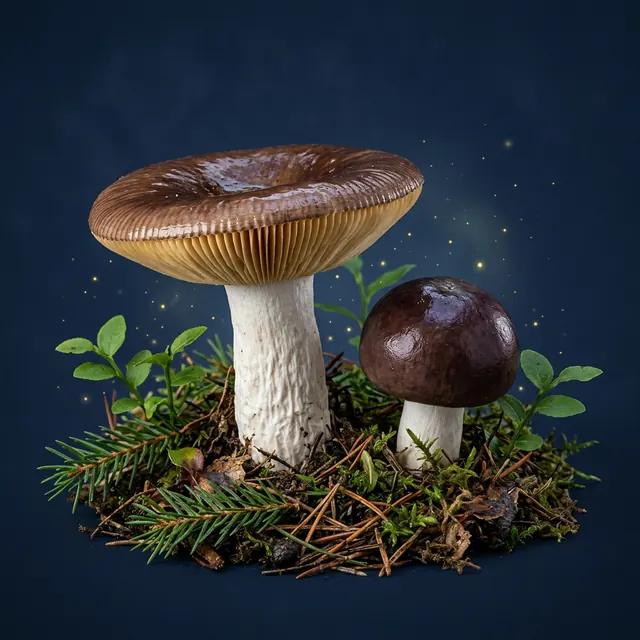
Entire russula
Russula integra
Polish folk names: gołąbek różnobarwny, gołębiatka
How to recognise
- Cap 3–12 cm, brown, brownish-purple, chocolate-red or yellow-brown, sticky and shiny when damp; margin notched.
- Gills crowded, white, later yellowish or pale ochre, without intermediate lamellae; spore print yellow.
- Stem 4–8 cm tall and 2–3 cm thick, whitish, often wrinkled, with yellow spots below.
- Flesh firm and white, smell faintly fruity, taste mild.
Where and when it grows
Coniferous forests, especially in the mountains and foothills, near bilberries. From July to October; common in Poland.
JanFebMarAprMayJunJulAugSepOctNovDec
Most often under: spruce, fir (mountains), among bilberries.
Beware of the lookalike
Burning brittlegill. The burning brittlegill is very similar, but has a very burning, long-lasting taste and a more reddish cap. It is inedible.
In the kitchen
Edible, with a nutty taste and crunchy flesh. Eat only after thorough boiling or frying.
Good to know
The colour of the cap is very variable, and not all similar russulas are edible. Collect only specimens with a mild taste and yellowish gills.
Frequently asked questions
Is entire russula edible?
Yes, entire russula is an edible mushroom.
When does entire russula grow?
July – October. Coniferous forests, especially in the mountains and foothills, near bilberries. From July to October; common in Poland.
Entire russula: what is it easily confused with?
Most often with the species Burning brittlegill. The burning brittlegill is very similar, but has a very burning, long-lasting taste and a more reddish cap. It is inedible.