

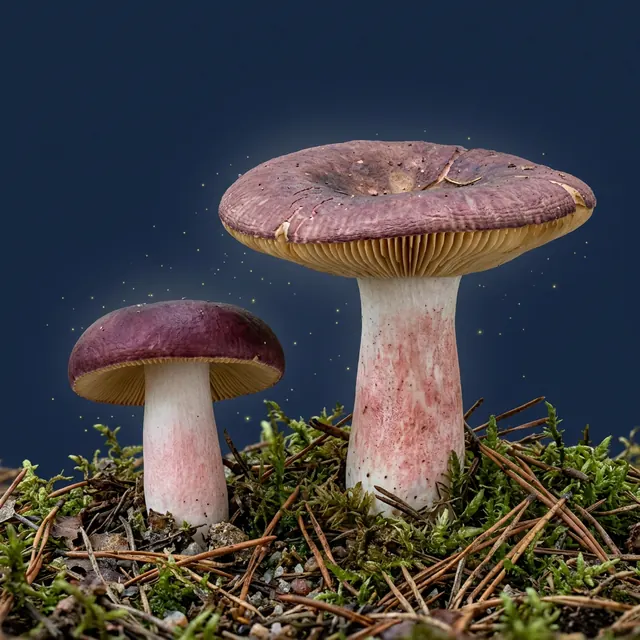
Atlas of mushrooms
Shrimp russula
Russula xerampelina
Edible
SeasonAugust – NovemberHabitatpine, spruce, oak, birchUnder the capblaszkiGrowson the ground
Polish folk names: gołąbek winny
How to recognise
- Cap 5–10 cm, colour depends on the tree: purple under conifers, pink to brownish-red under oaks, yellow-green under birches.
- Gills cream-white, later yellowish-cream, turn brown when pressed; spore print ochre.
- Stem 4–8 cm tall and 1.5–3 cm thick, red or white with a red tinge.
- Flesh cream, brownish-yellow in places; when mature it smells of herring (trimethylamine).
Where and when it grows
Coniferous, deciduous and mixed forests and parks, on the ground and litter. From August to November.
JanFebMarAprMayJunJulAugSepOctNovDec
Most often under: pine, spruce, oak, birch.
Beware of the lookalike
Gołąbek fioletowawy. There are many similar brittlegills, but most of them have no smell of herring or crustaceans.
In the kitchen
One of the best russulas. During frying or stewing the fishy smell fades; young caps are best.
Open the card in the atlasillustrations, foragers' photos, comparisonWhere it grows on the mapoccurrence in Poland
Frequently asked questions
Is shrimp russula edible?
Yes, shrimp russula is an edible mushroom.
When does shrimp russula grow?
August – November. Coniferous, deciduous and mixed forests and parks, on the ground and litter. From August to November.
Shrimp russula: what is it easily confused with?
Most often with the species Gołąbek fioletowawy. There are many similar brittlegills, but most of them have no smell of herring or crustaceans.