

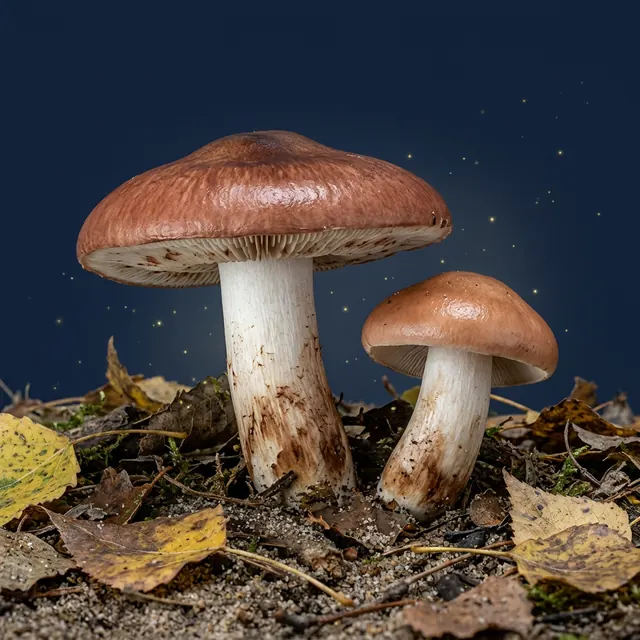
Poplar knight
Tricholoma populinum
How to recognise
- Cap 6–12 cm, reddish-brown, darker in the centre, slippery when wet.
- Gills whitish, turn slightly brown with age.
- Stem whitish when young, then brownish, especially at the base.
- Smell floury, taste mild, slightly bitter in old ones.
Up close
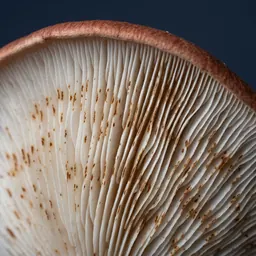 whitish gills
Underside of the cap
Gills whitish, crowded, with brown spots with age.
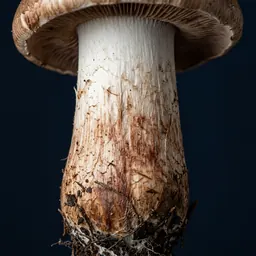 turns brown
Stem
Stem thick, whitish, turning brownish with age, without a ring.
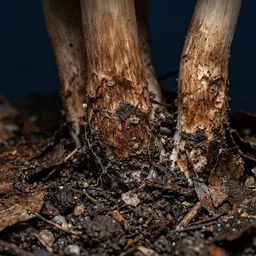 under poplar
Base of the stem
Base brownish, fruit bodies often fused in clumps in the soil under poplar.
 mealy smell
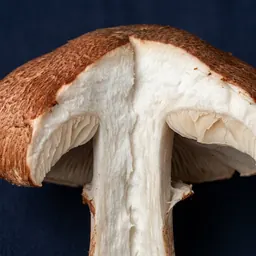
Cross-section
Flesh white, thick, with a mealy smell and a mild taste.
The close-ups are AI illustrations. Any doubt is settled by a mycologist or herbalist, not by a photo.
Where and when it grows
Only under poplars, in parks, avenues and along rivers, never in forests, often in clumps. From October to November. Rare in Poland.
JanFebMarAprMayJunJulAugSepOctNovDec
Most often under: poplar (always outside the forest).
Beware of the lookalike
Gąska kroplistobrzega. The gąska kroplistobrzega and the gąska białobrązowa grow in coniferous forests and are poisonous. The poplar knight grows only under poplars.
In the kitchen
Edible, but not very tasty, and old ones can be bitter. Because of its rarity it is better to leave it alone.
Good to know
On the Red List of Fungi of Poland with status V (vulnerable). Rare, so it is better not to collect it.
Frequently asked questions
Is poplar knight edible?
Yes, poplar knight is an edible mushroom.
When does poplar knight grow?
October – November. Only under poplars, in parks, avenues and along rivers, never in forests, often in clumps. From October to November. Rare in Poland.
Poplar knight: what is it easily confused with?
Most often with the species Gąska kroplistobrzega. The gąska kroplistobrzega and the gąska białobrązowa grow in coniferous forests and are poisonous. The poplar knight grows only under poplars.