

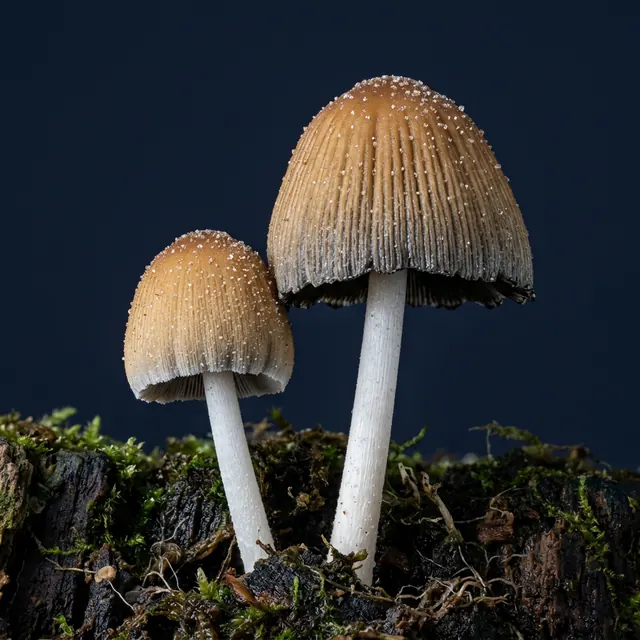
Mica cap
Coprinellus micaceus
Polish folk names: czernidłak błyszczący
How to recognise
- Cap 2–4 cm tall, bell-shaped, yellow-brown, grooved, with glistening granules when young.
- Gills crowded, white, black with age, deliquescing in damp.
- Stem 5–10 cm, thin, hollow, white, finely dusted when young.
- Spore print blackish-brown.
Up close
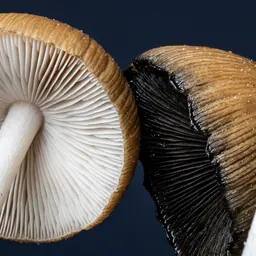 blackening gills
Underside of the cap
Gills crowded, white, then grey and black, with white edges; in damp conditions they dissolve.
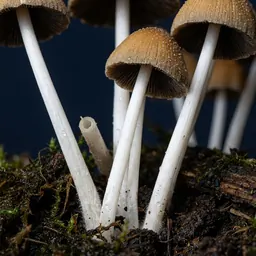 white, hollow
Stem
Stem thin, brittle, hollow, white, smooth and shiny.
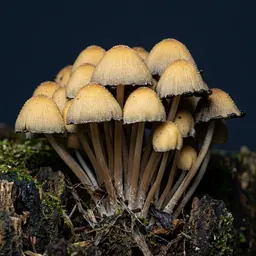 clump by the trunk
Base of the stem
Stems in a dense clump at a stump or near the roots of a tree.
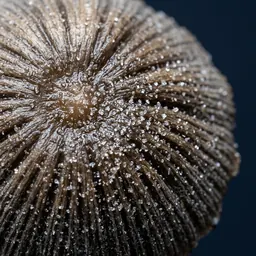 granules on the cap
Cross-section
Cap thin, furrowed, with shiny granules of the veil when young.
The close-ups are AI illustrations. Any doubt is settled by a mycologist or herbalist, not by a photo.
Where and when it grows
Rotting trunks, stumps and roots of deciduous trees in forests, parks and gardens, in dense tufts. From April to November.
JanFebMarAprMayJunJulAugSepOctNovDec
Most often under: stumps and roots of deciduous trees.
Beware of the lookalike
Common ink cap. The common ink cap is larger, grey, without glistening granules and grows near buried wood. With alcohol it causes severe poisoning.
In the kitchen
Young specimens with white gills only, prepared right after picking. Fry or stew for 10–15 min. Do not drink alcohol with them.
Good to know
Only young specimens with white gills are edible. Some authors suspect poisonings after eating it with alcohol, others consider this unfounded; it is better to avoid alcohol.
Frequently asked questions
Is mica cap edible?
Warunkowo. Only young specimens with white gills are edible. Some authors suspect poisonings after eating it with alcohol, others consider this unfounded; it is better to avoid alcohol.
When does mica cap grow?
April – November. Rotting trunks, stumps and roots of deciduous trees in forests, parks and gardens, in dense tufts. From April to November.
Mica cap: what is it easily confused with?
Most often with the species Common ink cap. The common ink cap is larger, grey, without glistening granules and grows near buried wood. With alcohol it causes severe poisoning.