

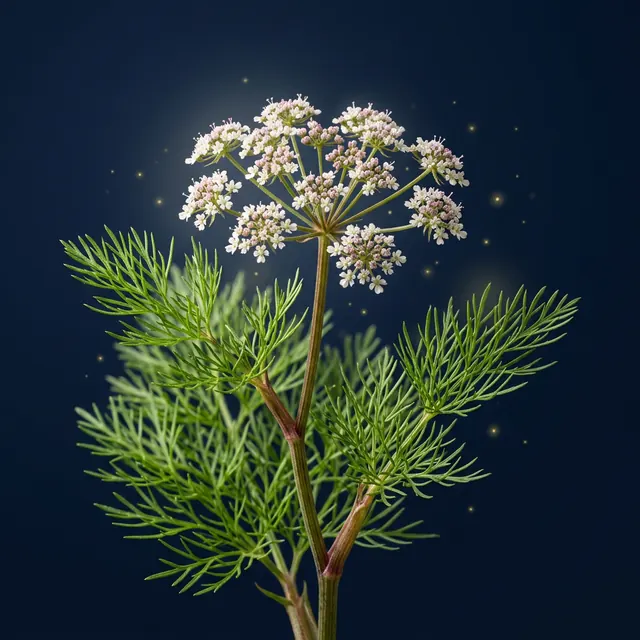
Spignel
Meum athamanticum Jacq.
Polish folk names: wszewłoga, Radix Mei
Traditional use
A former spice plant; a root extract flavours the Polish bitter vodka Gorzka Żołądkowa. In folk herbalism root preparations were considered to stimulate digestion, to be diuretic and expectorant; they were used for fever, asthma, nervous disorders, urinary tract inflammation and digestive disorders. In Scotland the roots were eaten like a vegetable. No clinical studies and no EMA monograph.
What it looks like
Perennial of mountain meadows with a strong, spicy scent, with a thick, long rhizome whose neck is covered in tattered fibres from old leaves. Stem hairless, hollow, grooved, often flushed reddish. Leaves several times pinnate, with thread-like segments gathered in tufts, like ornamental asparagus. Flowers white, sometimes pinkish, in a compound umbel of 6–15 umbellets.
Harvest
Gathered: root.
Form: decoction, tincture.
Lookalikes
- poison hemlock (Conium maculatum) and water hemlock (Cicuta virosa) – deadly poisonous umbellifers with white umbels
- fennel and dill – also thread-like leaves, but the flowers are yellow
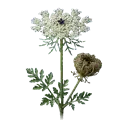
- wild carrot – white umbels, often with a dark flower in the middle
The information is educational and describes traditional use according to EMA/HMPC monographs (the European Medicines Agency and its Committee on Herbal Medicinal Products).It does not replace the advice of a doctor or pharmacist. Never eat a plant you are not 100% sure you recognise.