

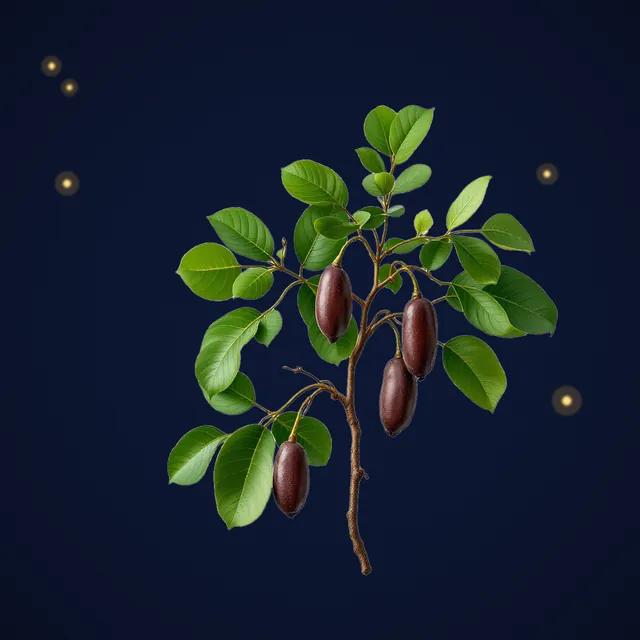
Carob
Ceratonia siliqua L.
Polish folk names: karob, chleb świętojański, drzewo karobowe
Traditional use
Sweet carob pods are an old Mediterranean food: they are eaten dried and made into syrup and a cocoa-like flour, but without caffeine. Seed flour (locust bean gum, E410) thickens foods and in infant formulas reduces regurgitation in babies. [TRADITION] Flour from the pods, rich in tannins, was given for diarrhoea.
What it looks like
An evergreen tree 8–15 m tall with a broad crown. Leaves leathery, pinnate, with 2–5 pairs of roundish leaflets and no terminal leaflet. Flowers small, reddish, growing straight from the branches. Pods dark brown, flattened, 10–25 cm.
Harvest
Gathered: pods, seeds (carob flour).
Form: flour, syrup, food additive (E410).
Lookalikes
- black locust – also has pods, but dry, flat and poisonous
- honey locust – long, twisted pods, a tree with thorns on the trunk
The information is educational and describes traditional use according to EMA/HMPC monographs (the European Medicines Agency and its Committee on Herbal Medicinal Products).It does not replace the advice of a doctor or pharmacist. Never eat a plant you are not 100% sure you recognise.