

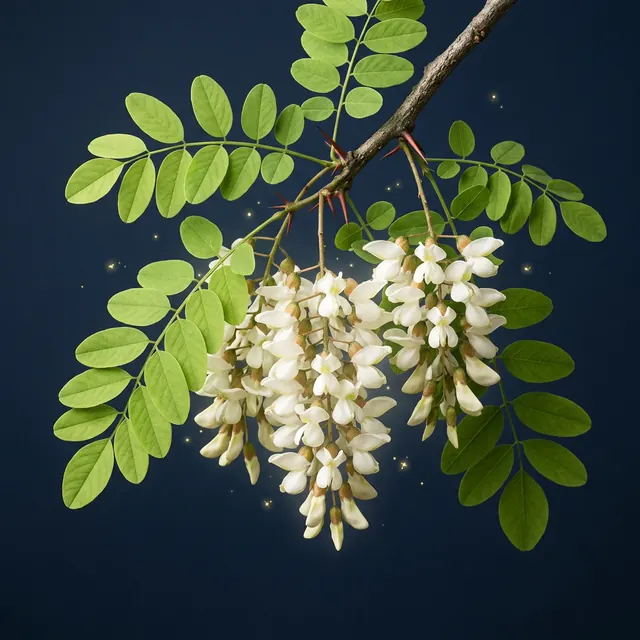
Black locust
Robinia pseudoacacia L.
Polish folk names: akacja, akacyja, agac
Symptoms of poisoning
Nausea, vomiting, abdominal pain, bloating, fever, visual disturbances; in severe cases destruction of blood cells and kidney failure. Symptoms may appear with a delay, even after several days.
What it looks like
Tree up to 25 m with deeply furrowed bark. Pairs of sharp spines, 5–15 mm, on the shoots. Leaves odd-pinnate, with 9–19 elliptic, rounded leaflets. In May–June white, fragrant pea-like flowers in drooping racemes 10–20 cm long. Pods flat, smooth, dark brown, 5–12 cm, remaining on the tree until spring.
What it is sometimes confused with
- peas and beans (pods with seeds – mainly children)
- wisteria (similar hanging clusters of flowers, a poisonous plant)
The information is educational and describes traditional use according to EMA/HMPC monographs (the European Medicines Agency and its Committee on Herbal Medicinal Products).It does not replace the advice of a doctor or pharmacist. Never eat a plant you are not 100% sure you recognise.