

Long pepper
Piper longum L.
Polish folk names: pippali, pieprz bengalski, bibo
Traditional use
[TRADITION] Long pepper (pippali) is, in Ayurveda, one of the three ingredients of the warming trikatu mixture, together with black pepper and ginger. Traditionally it is given for cough, colds and weak digestion. The ancient Romans valued it more highly than black pepper. It contains piperine. There are few clinical studies.
What it looks like
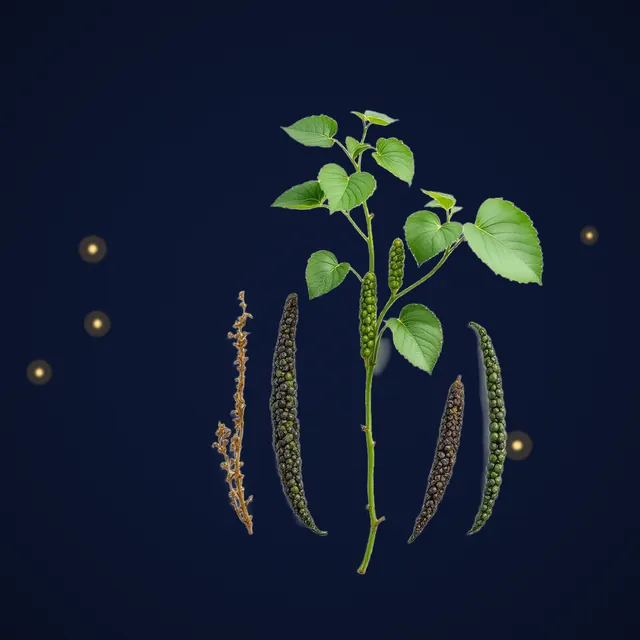
A slender climber with creeping shoots with nodes. Lower leaves heart-shaped, on long stalks, upper ones narrower. The fruiting spike is cylindrical, 2–4 cm, similar to a small alder cone; dried it is grey-black, pungent and slightly sweetish.
Harvest
Gathered: owocostany.
Form: powder, spice, decoction.
Lookalikes
- black pepper – single little balls, not little cones
- Javanese long pepper (Piper retrofractum) – very similar, sold under the same name
The information is educational and describes traditional use according to EMA/HMPC monographs (the European Medicines Agency and its Committee on Herbal Medicinal Products).It does not replace the advice of a doctor or pharmacist. Never eat a plant you are not 100% sure you recognise.