

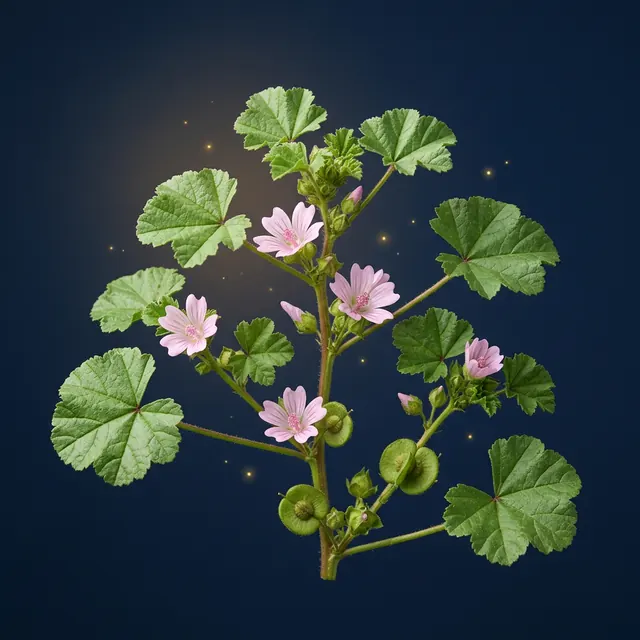
Dwarf mallow
Malva neglecta Wallr.
Polish folk names: babi serek, babski chleb, guziczkowe ziele
Traditional use
According to the pharmacopoeia, mallow leaf (Malvae folium) may come from dwarf mallow or common mallow. It contains plenty of mucilage, which has a protective and softening effect. In folk medicine macerates, infusions and decoctions were used for cough and sore throat, for constipation and diarrhoea, for digestive disorders, and externally as compresses for inflammation. The leaves, flowers and unripe fruits (“little cheeses”) are edible. This species has no monograph of its own from the EMA.
What it looks like
Low plant up to 50 cm with trailing stems. Leaves round or kidney-shaped, with 5–7 shallow lobes and a toothed margin, on long stalks. Small, pale pink flowers with 5 notched petals, 2–3 times longer than the calyx, several together in the leaf axils. The fruit is a flat disc of nutlets, like a little cheese wheel.
Harvest
Gathered: leaf, flower, young fruit (kitchen).
When: June – September.
Form: cold maceration, infusion, kitchen (soups, salads).
Lookalikes
- common mallow – larger, purple flowers with dark veins; harmless, also medicinal
- small-flowered mallow – petals shorter than the calyx; harmless
- cranesbills – deeply cut leaves; harmless
The information is educational and describes traditional use according to EMA/HMPC monographs (the European Medicines Agency and its Committee on Herbal Medicinal Products).It does not replace the advice of a doctor or pharmacist. Never eat a plant you are not 100% sure you recognise.