

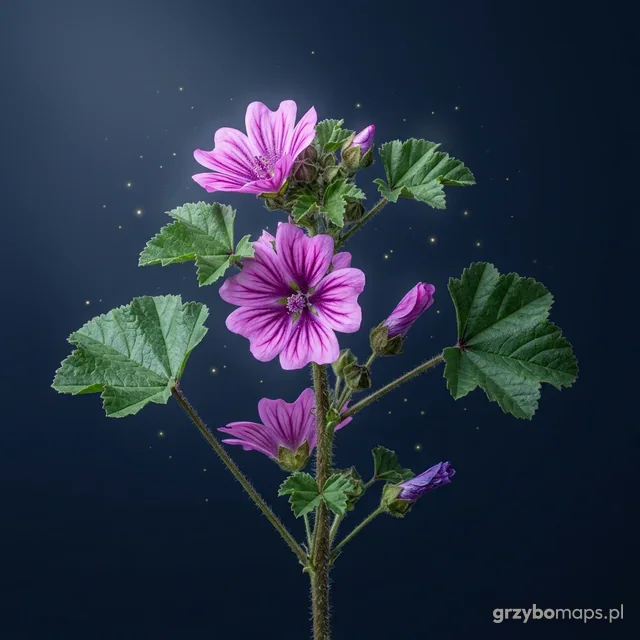
Common mallow
Malva sylvestris L.
Polish folk names: ślaz leśny, malwa dzika
Traditional use
Traditionally (EMA/HMPC, 2018 flower monograph) for cough and colds and mild complaints of the digestive tract. The mucilage protects an irritated throat.
What it looks like
Perennial up to 1 m tall with roundish, 5–7-lobed, toothed leaves. Pink-violet flowers with 5 heart-shaped petals and darker veins grow in small groups in the leaf axils. The fruit is a disc resembling a little cheese.
Harvest
Gathered: flower, leaf.
When: June – September.
Form: infusion.
Lookalikes
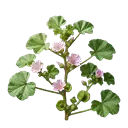
- Dwarf mallow (M. neglecta): lower, creeping, small, pale pink flowers – the leaf is also a raw material
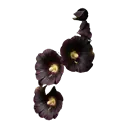
- Hollyhock (Alcea rosea): a garden plant, very tall, large flowers of various colours
The information is educational and describes traditional use according to EMA/HMPC monographs (the European Medicines Agency and its Committee on Herbal Medicinal Products).It does not replace the advice of a doctor or pharmacist. Never eat a plant you are not 100% sure you recognise.