

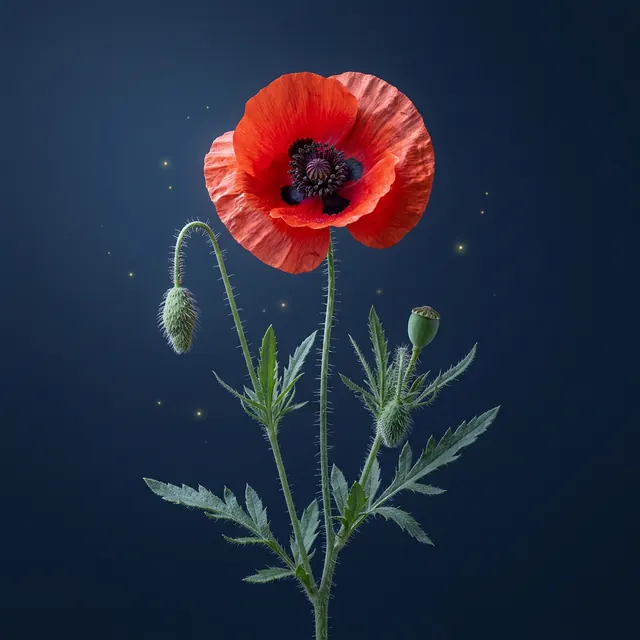
Corn poppy
Papaver rhoeas L.
Polish folk names: maczek, mak dziki, polny mak, Flos Rhoeados
Traditional use
In folk medicine an infusion of the petals was used for cough, for inflammation of the mouth and throat, and also for insomnia and excessive excitability. The petals contain mucilage and red pigments (anthocyanins), and the whole plant a milky sap with the alkaloid rhoeadine, of weak sedative effect. This is not the opium poppy and contains no morphine. There is no EMA monograph and no clinical studies confirming efficacy. The petals were also used to colour medicines and wine.
What it looks like
Annual plant up to 90 cm, bristly-hairy all over, with white milky sap. Leaves grey-green, pinnately lobed, with sharply toothed segments. Buds drooping, flowers erect, up to 10 cm across, with 4 thin, bright red petals, usually with a black blotch at the base. The fruit is a smooth, ovoid capsule (poppy head) 1–2 cm long.
Harvest
Gathered: petals.
When: May – August.
Form: infusion, colouring for drinks.
Lookalikes
- long-headed poppy – smaller, paler flowers and an elongated, club-shaped capsule; also poisonous
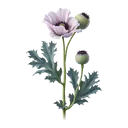
- opium poppy (garden) – bluish-green leaves clasping the stem, large white or violet flowers; contains opioids, its cultivation requires a permit
- oriental poppy from gardens – large flowers, a perennial plant
The information is educational and describes traditional use according to EMA/HMPC monographs (the European Medicines Agency and its Committee on Herbal Medicinal Products).It does not replace the advice of a doctor or pharmacist. Never eat a plant you are not 100% sure you recognise.