

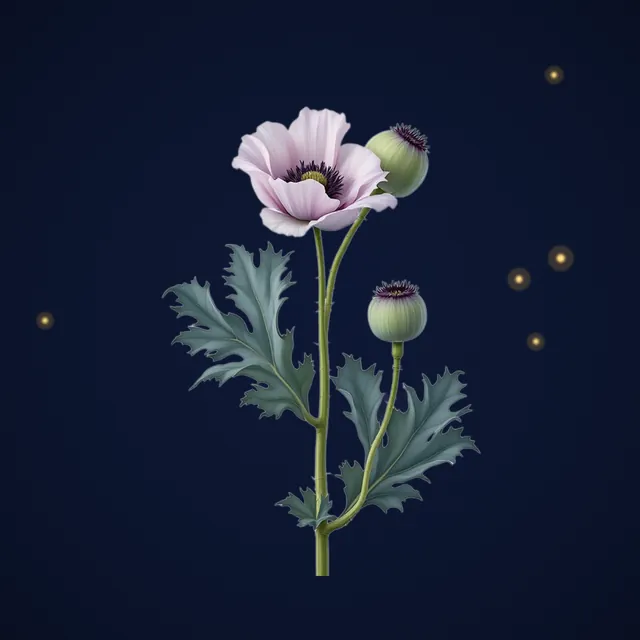
Opium poppy
Papaver somniferum L.
Polish folk names: mak ogrodowy, mak siewny, makówka
Traditional use
Poppy seeds are ordinary food: poppy-seed cake, kutia and noodles with poppy seeds belong to the Polish Christmas Eve. The milky sap of unripe poppy capsules, opium, was from antiquity the strongest painkiller and sleeping aid; today morphine and codeine are obtained from the poppy. In the recipes of old books we show opium only as a historical description. We describe the effects, risks and law in the Plants of Power section.
What it looks like
An annual plant 0.5–1.5 m tall, entirely blue-green, with a waxy bloom. Leaves hairless, wavy, clasping the stem. Flowers large, with four petals: white, lilac or red, often with a dark blotch. Capsule spherical or barrel-shaped, with a radiating disc on top.
Harvest
Gathered: seeds (food).
Form: seeds for baking, olej makowy.
Lookalikes
- field poppy – red flowers, green hairy leaves, small capsule
- oriental poppy – a garden perennial with hairy leaves and huge, red flowers
The information is educational and describes traditional use according to EMA/HMPC monographs (the European Medicines Agency and its Committee on Herbal Medicinal Products).It does not replace the advice of a doctor or pharmacist. Never eat a plant you are not 100% sure you recognise.