

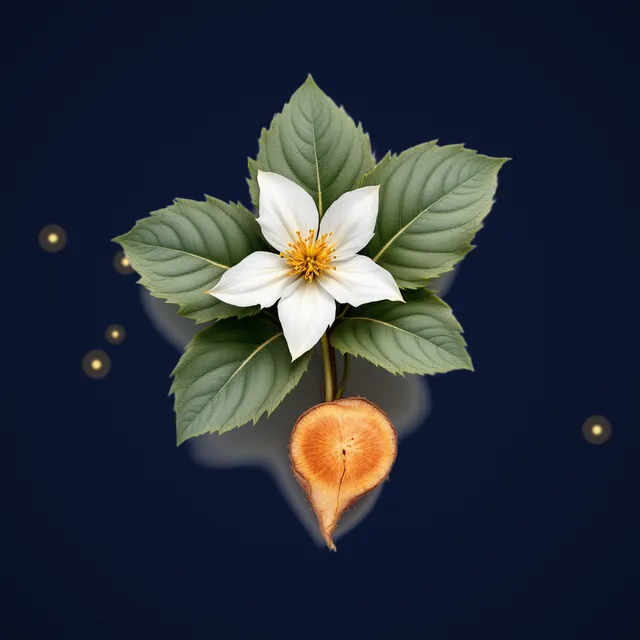
Bloodroot
Sanguinaria canadensis L.
Polish folk names: krwawnica kanadyjska, bloodroot, krwawy korzeń
Symptoms of poisoning
After swallowing: burning in the mouth and throat, severe vomiting, diarrhoea, dizziness, a slow pulse, fainting. The juice and "black salves" on the skin cause deep, slow-healing wounds and scars.
What it looks like
A low forest perennial 15–30 cm tall. In early spring it sends up one white flower with 8–12 petals and one roundish, deeply lobed leaf that wraps around the stalk. A broken rhizome oozes orange-red sap.
What it is sometimes confused with
- wood anemone and other white flowers of early spring – they have no red sap in the rhizome
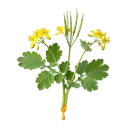
- greater celandine – a relative from our roadsides with orange sap
The information is educational and describes traditional use according to EMA/HMPC monographs (the European Medicines Agency and its Committee on Herbal Medicinal Products).It does not replace the advice of a doctor or pharmacist. Never eat a plant you are not 100% sure you recognise.