

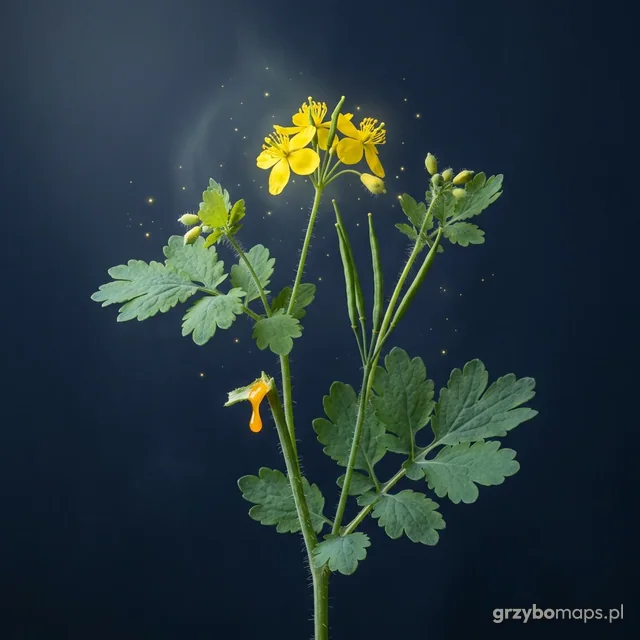
Greater celandine
Chelidonium majus L.
Polish folk names: jaskółcze ziele, brodawnik, celidonia
Traditional use
Formerly taken orally for digestive complaints and indigestion. The EMA judged the benefit-risk balance of oral use to be negative, and LiverTox describes more than a dozen cases of acute liver injury.
What it looks like
A perennial up to 70 cm from ruderal places, leaves blue-green, pinnately divided with rounded lobes. Flowers yellow, four-petalled, fruits long pod-like capsules. When broken, orange sap flows out.
Harvest
Gathered: herb (aerial parts).
When: May – June.
Lookalikes
- Lesser celandine: low-growing, shiny heart-shaped leaves, yellow flowers with many petals, no sap
- Buttercups: yellow flowers with 5 petals, no orange sap – also poisonous
The information is educational and describes traditional use according to EMA/HMPC monographs (the European Medicines Agency and its Committee on Herbal Medicinal Products).It does not replace the advice of a doctor or pharmacist. Never eat a plant you are not 100% sure you recognise.