

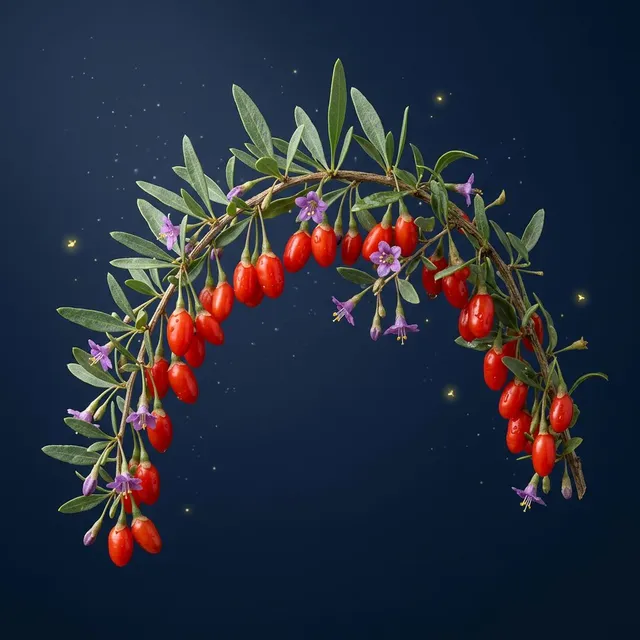
Common wolfberry
Lycium barbarum L.
Polish folk names: goji, jagody goji, kolcowój szkarłatny, wilcza jagoda chińska
Traditional use
The dried fruits are the famous “goji berries”, used for centuries in Chinese cooking and medicine as a tonic, “for the eyes” and for the elderly. In Poland the wolfberry also grows wild: it has run wild on slopes, by roads, walls and railway embankments, so many people have goji behind their fence without knowing it. The fruits contain carotenoids, especially zeaxanthin, and polysaccharides. Small clinical studies suggest a beneficial effect on the macular pigment in the eye and on well-being, but these are short trials on small groups. There is no evidence that goji cures any disease.
What it looks like
Shrub up to 3 m with long, arching, drooping, pale shoots bearing single thorns. Leaves narrowly lanceolate, grey-green, smooth, growing several together in clusters. Flowers small, funnel-shaped, violet, from June to September. The fruits are oblong, bright red berries 1–2 cm long, ripening from August to October.
Harvest
Gathered: fruit (ripe).
When: August – October.
Form: owoce suszone, kitchen (for muesli, teas, desserts).
Lookalikes
- bittersweet nightshade – a climber with purple flowers with a yellow beak and oval red berries; the berries are poisonous
- fly honeysuckle – a shrub with pairs of red, round, fused berries; poisonous
- common barberry – elongated red fruits in clusters, thorns in threes; edible, sour
The information is educational and describes traditional use according to EMA/HMPC monographs (the European Medicines Agency and its Committee on Herbal Medicinal Products).It does not replace the advice of a doctor or pharmacist. Never eat a plant you are not 100% sure you recognise.