

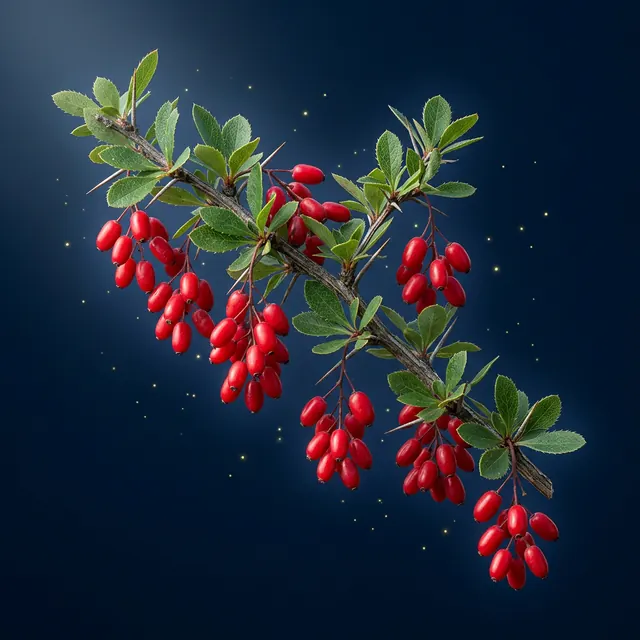
Common barberry
Berberis vulgaris L.
Polish folk names: kwaśnica pospolita, kwaśniec, berberys pospolity
Traditional use
Ripe, sour fruits were added to teas and preserves as a source of vitamin C, pectins and fruit acids, especially in feverish conditions. The bark and root contain alkaloids, mainly berberine; they were formerly used for liver and bile duct diseases, lack of appetite and gallstones. Berberine is intensively studied (sugar, cholesterol, inflammation), but results for pure berberine do not automatically apply to barberry preparations. There is no EMA monograph.
What it looks like
Shrub up to 3 m with angular twigs and sharp, three-pronged thorns. Leaves obovate, 3–6 cm, finely prickly-toothed, in clusters. Flowers yellow, fragrant, in hanging racemes up to 5 cm. Fruits are oblong, shiny red, sour berries in hanging clusters; they ripen in September and October. Wood and inner bark yellow.
Harvest
Gathered: fruit, (formerly: bark, root, leaf).
When: September – October.
Form: fruit infusion, preserve/kitchen, syrup.
Lookalikes
- Japanese barberry (Berberis thunbergii) – common in gardens, leaves with entire margins, fruits single or a few together, not in clusters
- yew (Taxus baccata) – red arils, but needles instead of leaves and a strongly poisonous seed
- honeysuckles – red berries in pairs, poisonous
The information is educational and describes traditional use according to EMA/HMPC monographs (the European Medicines Agency and its Committee on Herbal Medicinal Products).It does not replace the advice of a doctor or pharmacist. Never eat a plant you are not 100% sure you recognise.