

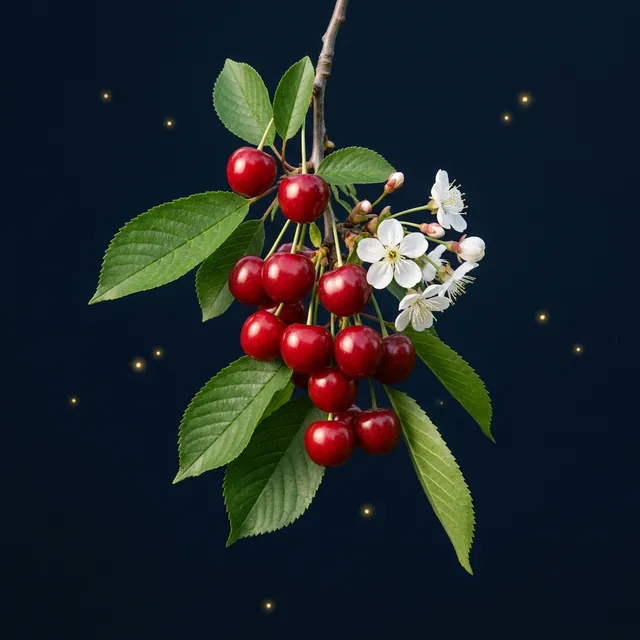
Sour cherry
Prunus cerasus L.
Polish folk names: wiśnia, kwaśna wiśnia, wiśnia kwaśna
Traditional use
The fruits are sour and rich in anthocyanins. Ripe fruits are edible whole, but the stones contain amygdalin. Do not crack them open: they release hydrogen cyanide. A stone swallowed whole usually leaves the digestive tract safely.
What it looks like
Tree 3–10 m with a spreading crown. Leaves oval, finely serrated, glossy. Flowers white, in umbels of 2–4, flowering in April and May. Fruits round, red, with a single hard stone.
Harvest
Gathered: fruits.
When: June – July.
Form: jam, juice, kompot, tincture, suszone.
Lookalikes
- wild cherry – fruits sweeter, on long stalks, a taller and stronger tree; the sour cherry has sour fruits and a lower habit
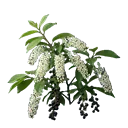
- bird cherry – fruits black, in hanging clusters; the sour cherry has fruits that are single or in bunches on stalks
The information is educational and describes traditional use according to EMA/HMPC monographs (the European Medicines Agency and its Committee on Herbal Medicinal Products).It does not replace the advice of a doctor or pharmacist. Never eat a plant you are not 100% sure you recognise.