

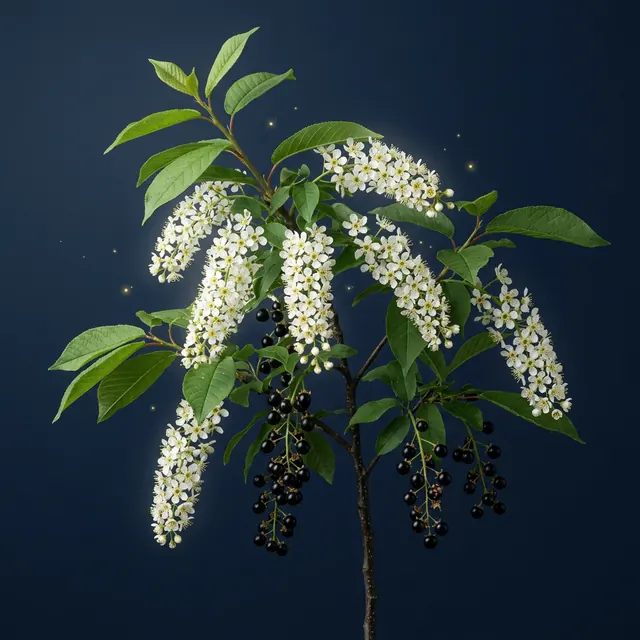
Bird cherry
Prunus padus L.
Polish folk names: czeremcha pospolita, trzemcha, czeremucha, śliwa kocierpka, kocierba, korcipa, kotarba, smrodynia
Traditional use
No EMA monograph. The ripe fruits are edible, slightly bitterish; dried, they are added in Siberia to tinctures and dumplings. In folk medicine the bark of young twigs was used as an astringent, diuretic and anti-rheumatic. Studies are laboratory and animal studies - no clinical studies.
What it looks like
Tree up to 15 m or a large shrub, found in riparian forests and along waters. Bark dark; when crushed it smells unpleasant, of almonds. Leaves elliptic, up to 12 cm, finely and sharply serrated, with 1–2 glands at the base. White, strongly scented flowers in drooping racemes up to 15 cm. Fruits black, glossy drupes about 8 mm, bittersweet.
Harvest
Gathered: fruit (flesh), bark.
When: September – October.
Form: kitchen (ripe fruits, without stones), tincture.
Lookalikes
- black cherry - leathery, glossy leaves, flowers later; invasive, also cyanogenic
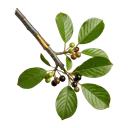
- alder buckthorn - black fruits singly in the leaf axils, not in racemes; strongly laxative
The information is educational and describes traditional use according to EMA/HMPC monographs (the European Medicines Agency and its Committee on Herbal Medicinal Products).It does not replace the advice of a doctor or pharmacist. Never eat a plant you are not 100% sure you recognise.