

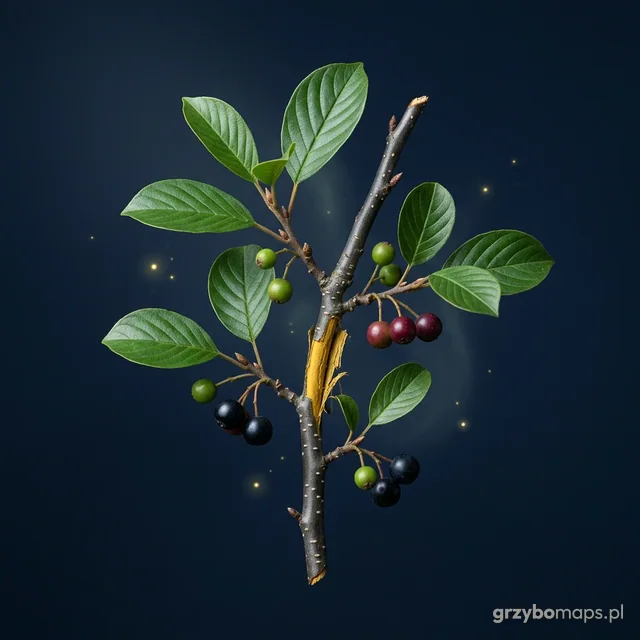
Alder buckthorn
Frangula alnus Mill. (syn. Rhamnus frangula L.)
Polish folk names: kruszyna, szakłak kruchy
Traditional use
Traditionally and according to the HMPC (EMA), for short-term use in occasional constipation. Contains anthraquinones (glucofrangulins) with a strong laxative effect.
What it looks like
Shrub up to 3–5 m tall with smooth, dark bark with pale, transverse lenticels; the bark is yellowish underneath. Leaves elliptical, entire, with parallel veins. Fruits globular, first green, then red, finally black – poisonous.
Harvest
Gathered: bark.
When: April – June.
Form: decoction.
Lookalikes
- Common buckthorn: has thorns at the ends of the shoots and toothed leaves; alder buckthorn is unarmed, leaves with entire margins
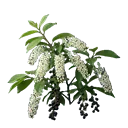
- Bird cherry: bark with a bitter-almond smell, flowers in drooping racemes
The information is educational and describes traditional use according to EMA/HMPC monographs (the European Medicines Agency and its Committee on Herbal Medicinal Products).It does not replace the advice of a doctor or pharmacist. Never eat a plant you are not 100% sure you recognise.