

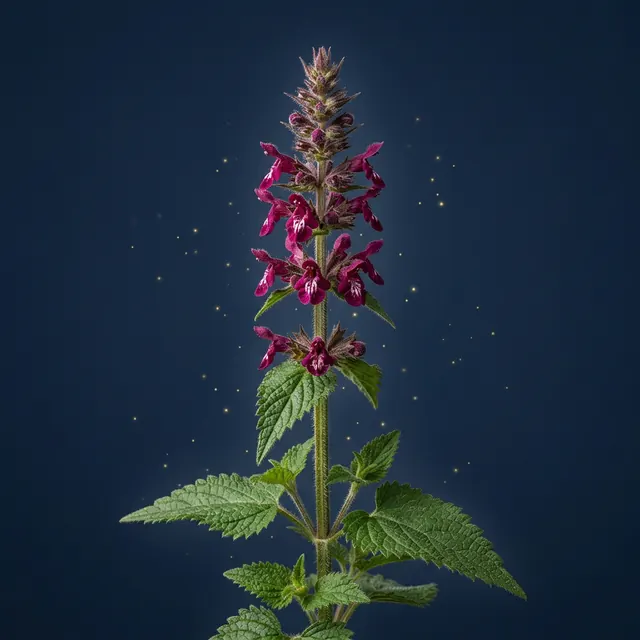
Hedge woundwort
Stachys sylvatica L.
Traditional use
In the past, together with marsh woundwort, it was applied to wounds to help them heal; the English name “woundwort” means “wound herb”. There is no EMA monograph. In a 2024 study an extract of the herb was antibacterial and anthelmintic in the laboratory and contained chlorogenic acid and verbascoside. No studies in humans.
What it looks like
Perennial up to 1 m with a four-angled, softly hairy stem and an unpleasant smell. Leaves stalked, opposite, heart-shaped, pointed, coarsely serrated, hairy. Flowers dark carmine, two-lipped, with a white pattern on the lower lip, in a terminal spike of several whorls.
Harvest
Gathered: herb (aerial parts).
When: June – August.
Form: compress, infusion.
Lookalikes
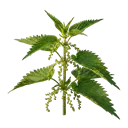
- stinging nettle – similar leaves, but it stings and has green flowers in drooping spikes; harmless
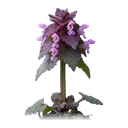
- red dead-nettle – smaller, paler pink flowers; harmless
The information is educational and describes traditional use according to EMA/HMPC monographs (the European Medicines Agency and its Committee on Herbal Medicinal Products).It does not replace the advice of a doctor or pharmacist. Never eat a plant you are not 100% sure you recognise.