

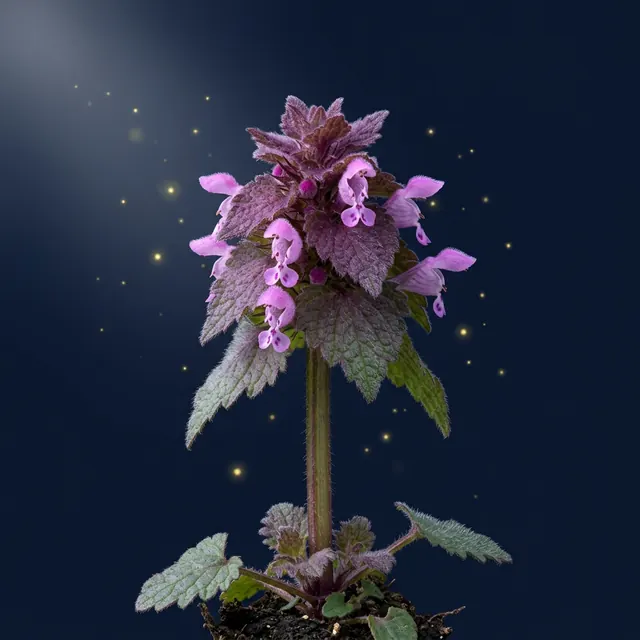
Red dead-nettle
Lamium purpureum L.
Polish folk names: pokrzywa głucha purpurowa
Traditional use
No EMA monograph. Mainly a wild vegetable weed: the leaves were eaten in Sweden (even in winter) and in Podlasie. Used locally in folk medicine, e.g. in Anatolia. Animal and laboratory studies (anti-inflammatory, antibacterial effects) - no clinical studies.
What it looks like
Low annual plant 10–25 cm tall, a common weed of fields and gardens. Stem square, often violet toward the top. Leaves opposite, heart-shaped-ovate, crenate, the upper ones crowded and often flushed purple. Pink-purple lipped flowers in whorls at the top; upper lip hooded, lower with darker spots.
Harvest
Gathered: herb (aerial parts), young leaves.
When: March – June.
Form: kitchen (raw or cooked leaves), infusion.
Lookalikes
- cut-leaved dead-nettle - deeply cut leaves, plant almost scentless; harmless
- spotted dead-nettle - larger perennial with runners, bent corolla tube; harmless
- young nettle - stings, has no pink flowers
The information is educational and describes traditional use according to EMA/HMPC monographs (the European Medicines Agency and its Committee on Herbal Medicinal Products).It does not replace the advice of a doctor or pharmacist. Never eat a plant you are not 100% sure you recognise.