

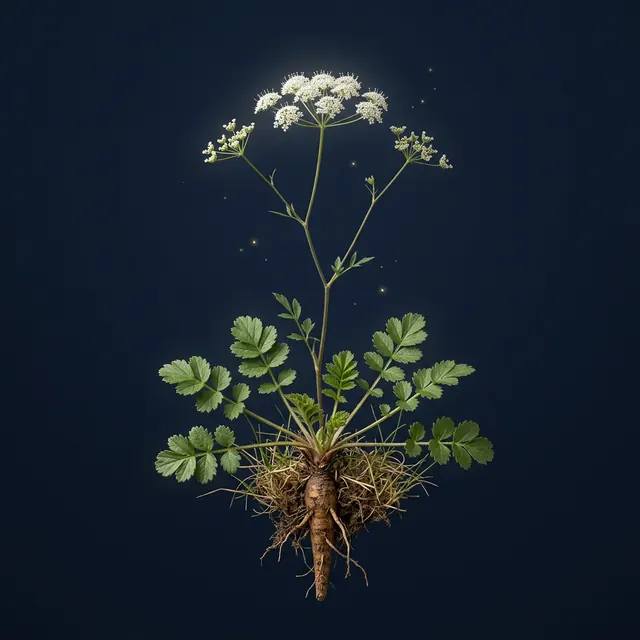
Burnet-saxifrage
Pimpinella saxifraga L.
Polish folk names: biedrzeniec
Traditional use
No EMA monograph for burnet-saxifrage (the EMA assesses only the related anise). In folk medicine the root was used as an expectorant and antispasmodic for diseases of the upper respiratory tract, and also for flatulence, indigestion and diarrhoea. A decoction was used to gargle for inflammations. The root contains essential oil, tannins and furanocoumarins. There are no clinical studies.
What it looks like
Perennial of dry places, 15–50 cm tall, with a spindle-shaped root and the remains of dead leaves at the neck. Stem rounded, almost leafless above. Basal leaves once pinnate with 3–6 pairs of ovate or roundish, toothed leaflets; stem leaves with narrow segments. From June to September, tiny white flowers in compound umbels without bracts.
Harvest
Gathered: root with rhizome.
When: March, April, October, November.
Form: decoction, rinse.
Lookalikes
- Poison hemlock – DEADLY POISONOUS; much taller, stem bare with purple blotches, leaves multiply pinnate, smells of mice
- Fool's parsley – POISONOUS; leaves similar to parsley, leaflets hanging downwards beneath the umbels
- Greater burnet-saxifrage – similar, larger, grows on damper meadows; has a similar use
The information is educational and describes traditional use according to EMA/HMPC monographs (the European Medicines Agency and its Committee on Herbal Medicinal Products).It does not replace the advice of a doctor or pharmacist. Never eat a plant you are not 100% sure you recognise.