

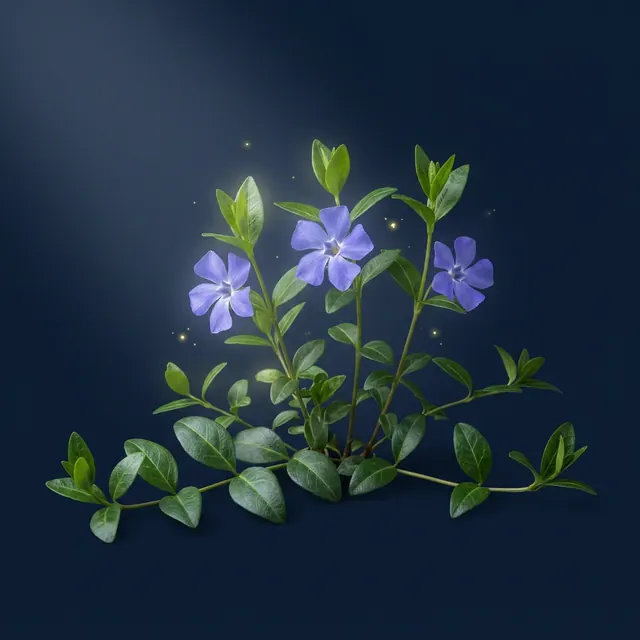
Lesser periwinkle
Vinca minor L.
Polish folk names: barwinek
Symptoms of poisoning
A drop in blood pressure, disturbances of heart function and breathing; in larger amounts also stomach and intestinal complaints. The plant is described as mildly poisonous, but it affects the circulation.
What it looks like
Evergreen dwarf shrub creeping along the ground, with shoots up to 1 m long rooting at the nodes; often forms dense carpets. Leaves opposite, elliptic, leathery, dark green and glossy, entire, up to 5 cm. Solitary blue-violet flowers 2.5–3 cm across with five obliquely cut corolla lobes, blooming from March to May.
What it is sometimes confused with
- greater periwinkle (cultivated) – larger, leaves fringed with hairs at the edge; also poisonous
- common ivy – creeps in similar places; lobed leaves; poisonous
The information is educational and describes traditional use according to EMA/HMPC monographs (the European Medicines Agency and its Committee on Herbal Medicinal Products).It does not replace the advice of a doctor or pharmacist. Never eat a plant you are not 100% sure you recognise.
Frequently asked questions
Is lesser periwinkle poisonous to cats?
Yes. It contains alkaloids and is not fit to eat. After nibbling a leaf it usually ends with vomiting or diarrhoea.
Is lesser periwinkle poisonous to dogs?
Yes. The symptoms are similar to those in cats, and their severity depends on how much of the plant was eaten and on the dog's size.
Is lesser periwinkle poisonous to children?
Yes, but it usually ends with mild symptoms. Keep the plant out of reach of small children.
What should I do if an animal or a child eats a piece of this plant?
Remove the remains from the mouth, give a little water and keep a piece of the plant. For an animal, call a vet; for a child, a doctor. If symptoms are worrying, call 112.