

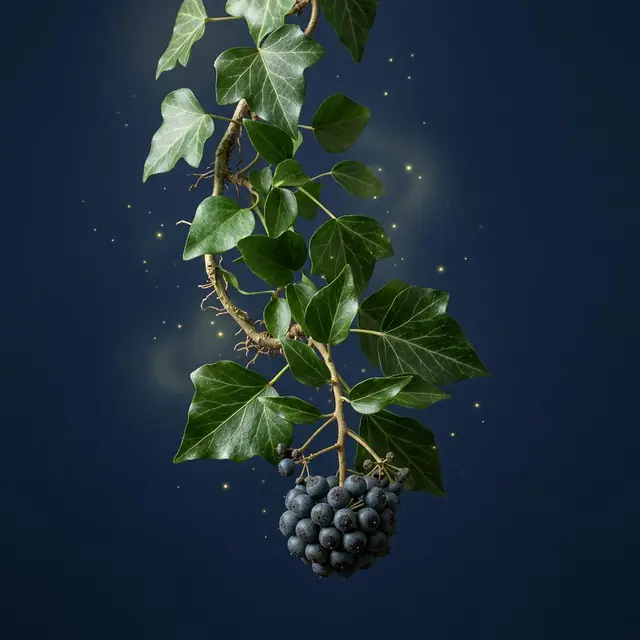
Common ivy
Hedera helix L.
Polish folk names: bluszcz, bluszcz zwyczajny
Symptoms of poisoning
After eating berries or leaves: burning in the mouth, vomiting, diarrhoea, abdominal pain. The bitter taste usually discourages eating more. Pruning ivy with bare hands can cause an itchy rash with small blisters.
What it looks like
Evergreen climber that climbs up to 20 m by means of clinging rootlets, or creeps along the ground. Leaves leathery, dark green, 3–5-lobed on sterile shoots, ovate and entire on flowering ones. Flowers small, yellow-green, in spherical umbels, from September to November. Fruits are black berries, ripening in spring of the following year.
What it is sometimes confused with
- elderberries: grow in flat umbels on a shrub, not on a climber
- Virginia creeper: also climbs walls, but has compound or lobed leaves, red in autumn, and blue fruits
The information is educational and describes traditional use according to EMA/HMPC monographs (the European Medicines Agency and its Committee on Herbal Medicinal Products).It does not replace the advice of a doctor or pharmacist. Never eat a plant you are not 100% sure you recognise.
Frequently asked questions
Is common ivy poisonous to cats?
Yes. The black fruits and leaves contain saponins: vomiting and diarrhoea. The sap can irritate the skin.
Is common ivy poisonous to dogs?
Yes. The symptoms are similar to those in cats, and their severity depends on how much of the plant was eaten and on the dog's size.
Is common ivy poisonous to children?
Yes. Keep the plant out of the reach of small children.
What should I do if an animal or a child eats a piece of this plant?
Remove the remains from the mouth, give a little water and keep a piece of the plant. For an animal, call a vet; for a child, a doctor. If symptoms are worrying, call 112.