

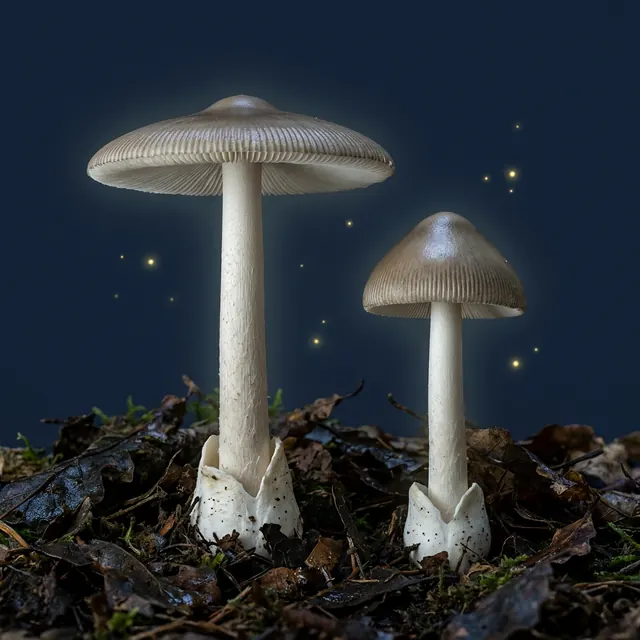
Grisette
Amanita vaginata
Polish folk names: muchomor mglejarka, muchomor pochwiasty, mglejarka pochwiasta
How to recognise
- Cap 3–10 cm, grey to ash-grey or greyish-brown, with an umbo, margin strongly striate.
- Gills free, moderately crowded, always white.
- Stem 10–20 cm, 8–20 mm thick, whitish to light grey, without a ring, growing from a white, lobed volva.
- Flesh white, brittle, odourless; spore print white.
Up close
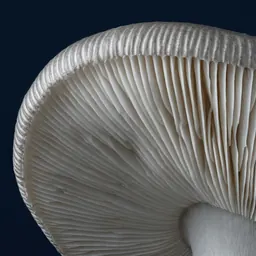 white gills
Underside of the cap
Gills free, white, springy; cap margin strongly striate.
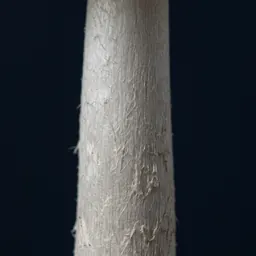 no ring
Stem
Stem tall, whitish to light grey, without a ring, sometimes with tiny fibrils.
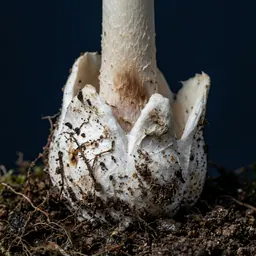 pochwa
Base of the stem
Base in a loose, white, sac-like volva, without a bulb. Twist out the whole mushroom.
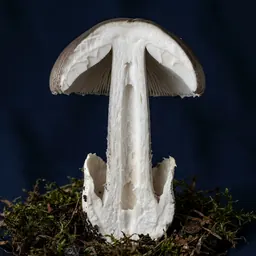 brittle flesh
Cross-section
Flesh white, brittle, odourless; the stem becomes hollow with time.
The close-ups are AI illustrations. Any doubt is settled by a mycologist or herbalist, not by a photo.
Where and when it grows
All types of forest, in the lowlands and mountains, no soil requirements. From summer to autumn.
JanFebMarAprMayJunJulAugSepOctNovDec
Most often under: all types of forest.
Beware of the lookalike
Death cap. The death cap has a ring on the stem, a greenish cap without striations and a bulb in the volva. The grisette has no ring, and the cap margin is strongly striated.
In the kitchen
We do not recommend collecting it. If you do, only after a certain identification and always after cooking for at least 20 min; it is poisonous raw.
Good to know
Poisonous raw, edible only after cooking. Most authors advise against collecting it, because it is easily confused with deadly poisonous amanitas.
Frequently asked questions
Is grisette edible?
Warunkowo. Poisonous raw, edible only after cooking. Most authors advise against collecting it, because it is easily confused with deadly poisonous amanitas.
When does grisette grow?
June – October. All types of forest, in the lowlands and mountains, no soil requirements. From summer to autumn.
Grisette: what is it easily confused with?
Most often with the species Death cap. The death cap has a ring on the stem, a greenish cap without striations and a bulb in the volva. The grisette has no ring, and the cap margin is strongly striated.