

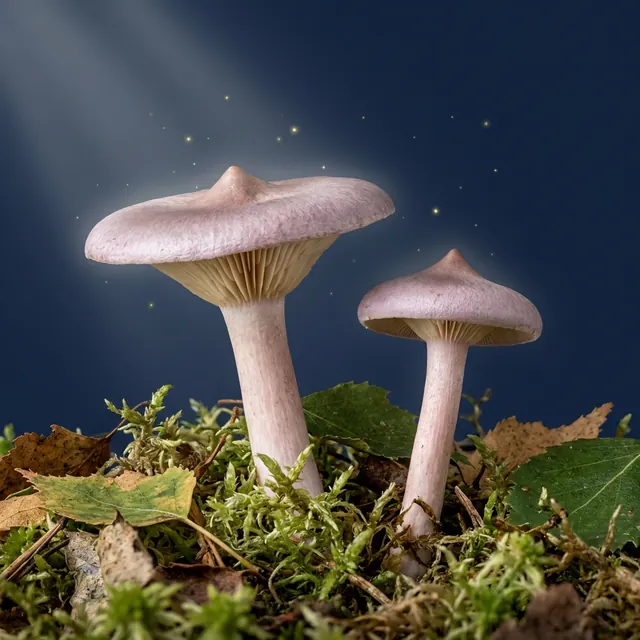
Coconut-scented milkcap
Lactarius glyciosmus
Polish folk names: mleczaj słodkawy, mleczaj wonny
How to recognise
- Cap 1–5.5 cm, with a small conical umbo, silky, lilac-grey, pink-grey or pale grey.
- Gills cream or pale ochre, dense, slightly decurrent.
- Stem 1.5–7 cm tall and 0.2–0.8 cm thick, whitish to faintly pink, brittle, hollow.
- Flesh whitish, brittle, smelling of coconut; milk watery-white, at first mild, then acrid.
Up close
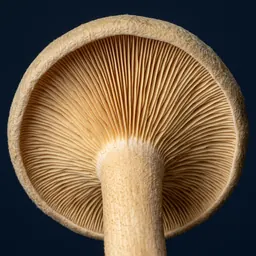 kremowe blaszki
Underside of the cap
Gills crowded, cream to pale ochre, slightly decurrent.
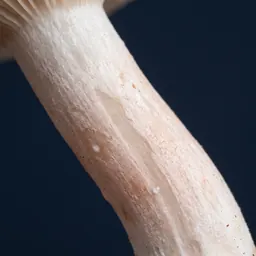 kruchy
Stem
Thin, brittle stem, whitish to pale pink, hollow inside.
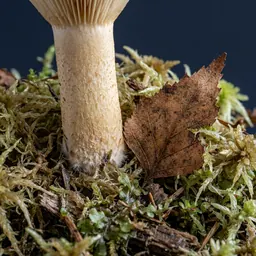 w torfowcach
Base of the stem
Grows under birches, often among sphagnum.
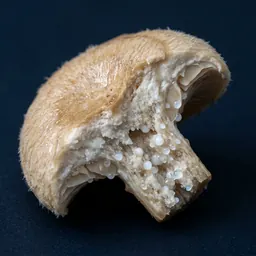 zapach kokosa
Cross-section
Flesh whitish and brittle, smells of coconut; latex watery-white.
The close-ups are AI illustrations. Any doubt is settled by a mycologist or herbalist, not by a photo.
Where and when it grows
Forests, thickets and parks with birches, often among sphagnum mosses, on acidic soils. From August to October; not rare in Poland.
JanFebMarAprMayJunJulAugSepOctNovDec
Most often under: brzoza.
Beware of the lookalike
Other small milkcaps from under birches. You will recognise the coconut-scented milkcap by its distinct coconut smell and its lilac-grey, silky cap with a small umbo.
In the kitchen
Edible, but not very tasty and has acrid milk. Needs parboiling (about 10 minutes, pour away the water), then it is suitable as an addition to pickles.
Frequently asked questions
Is coconut-scented milkcap edible?
Warunkowo. It requires proper preparation.
When does coconut-scented milkcap grow?
August – October. Forests, thickets and parks with birches, often among sphagnum mosses, on acidic soils. From August to October; not rare in Poland.
Coconut-scented milkcap: what is it easily confused with?
Most often with the species Other small milkcaps from under birches. You will recognise the coconut-scented milkcap by its distinct coconut smell and its lilac-grey, silky cap with a small umbo.