

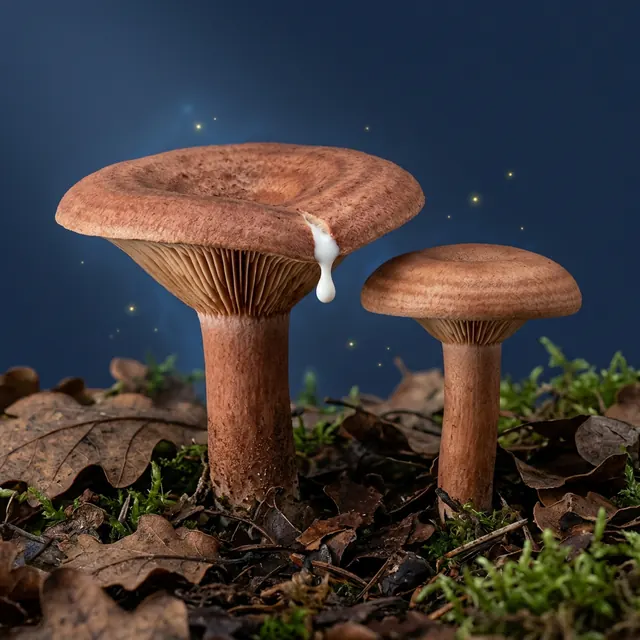
Oakbug milkcap
Lactarius quietus
Polish folk names: mleczaj miły
How to recognise
- Cap 3–8 cm, matt, red-brown to cinnamon-brown, sometimes with delicate concentric zones; without an umbo.
- Gills fairly crowded, decurrent, whitish, later cinnamon-brown.
- Stem 3–10 cm tall and 0.6–1.7 cm thick, the colour of the cap, red near the base.
- Milk white with a cream tinge, mild, with a slightly bitter aftertaste; smell like cod-liver oil or bugs.
Where and when it grows
Deciduous and mixed forests, exclusively with oak. From June to October; common in Poland.
JanFebMarAprMayJunJulAugSepOctNovDec
Most often under: oak (exclusively).
Beware of the lookalike
Rufous milkcap. The rufous milkcap grows under pines and spruces, has a pointed umbo in the middle of the cap and a burning taste.
In the kitchen
Best fried, which makes the unpleasant smell disappear. If it is bitter raw, scald it with boiling water before frying.
Good to know
Edibility disputed: some authors list it as inedible because of its smell, others as edible. The unpleasant smell disappears when fried.
Frequently asked questions
Is oakbug milkcap edible?
Warunkowo. Edibility disputed: some authors list it as inedible because of its smell, others as edible. The unpleasant smell disappears when fried.
When does oakbug milkcap grow?
June – October. Deciduous and mixed forests, exclusively with oak. From June to October; common in Poland.
Oakbug milkcap: what is it easily confused with?
Most often with the species Rufous milkcap. The rufous milkcap grows under pines and spruces, has a pointed umbo in the middle of the cap and a burning taste.