

Ginseng
Panax ginseng C.A.Mey.
Polish folk names: żeń-szeń, żeń-szeń właściwy, żeń-szeń koreański, ginseng
Traditional use
Traditionally (EMA/HMPC) for symptoms of weakness, such as fatigue and feebleness. A Cochrane review (2010) found no convincing evidence that ginseng improves memory and thinking in healthy people or in people with dementia. Other promises (immunity, potency, cancer) have no strong evidence.
What it looks like
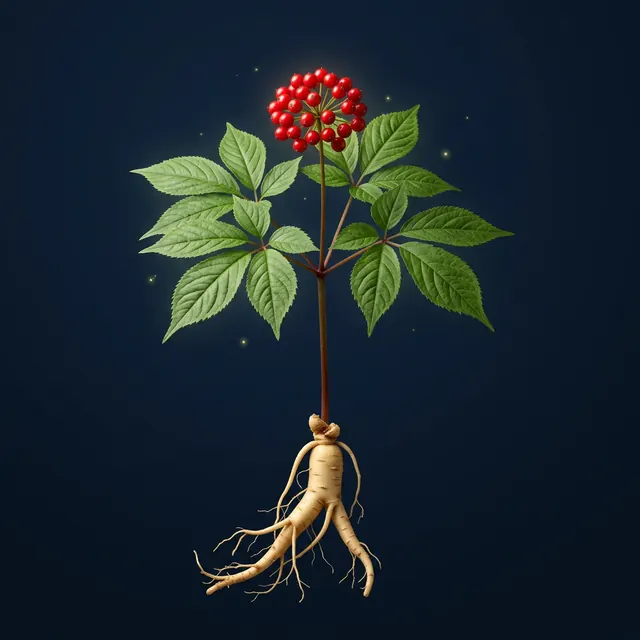
Perennial up to about 50 cm. At the top of the stem a whorl of palmately compound leaves with five serrated leaflets. From the centre rises an umbel of small greenish-white flowers, followed by a round cluster of bright red fruits. Taproot cream-coloured, often forked like a human figure.
Harvest
Gathered: root (white, or red – steamed).
Form: powder, decoction, tablets with extract.
Lookalikes
- American ginseng (Panax quinquefolius): a different species with a similar root
- Eleuthero (“Siberian ginseng”) and ashwagandha (“Indian ginseng”): completely different plants sold under misleading names
The information is educational and describes traditional use according to EMA/HMPC monographs (the European Medicines Agency and its Committee on Herbal Medicinal Products).It does not replace the advice of a doctor or pharmacist. Never eat a plant you are not 100% sure you recognise.