

Eleuthero
Eleutherococcus senticosus (Rupr. & Maxim.) Maxim.
Polish folk names: żeń-szeń syberyjski, eleuterokok
Traditional use
Traditionally (EMA/HMPC) for symptoms of weakness (asthenia), such as fatigue and feebleness. The committee also assessed many clinical studies: a possible effect on fatigue was seen, but flaws in the studies do not allow strong conclusions.
What it looks like
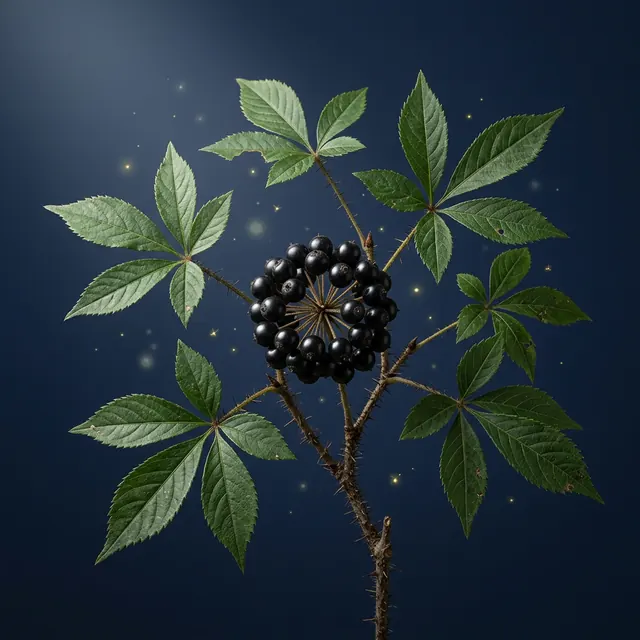
Shrub up to 2–3 m with shoots densely covered in thin thorns. Leaves palmately compound with 5 serrated leaflets. Small flowers in globose umbels, fruits black and round. Root knotty, greyish-brown, with many lateral roots.
Harvest
Gathered: root and rhizome.
Form: infusion, decoction, tincture, tablets.
Lookalikes
- True ginseng: a different herbaceous plant; the name “Siberian ginseng” is misleading
- Aralia and other prickly members of the ginseng family: ornamental in gardens, not for drinking
The information is educational and describes traditional use according to EMA/HMPC monographs (the European Medicines Agency and its Committee on Herbal Medicinal Products).It does not replace the advice of a doctor or pharmacist. Never eat a plant you are not 100% sure you recognise.