

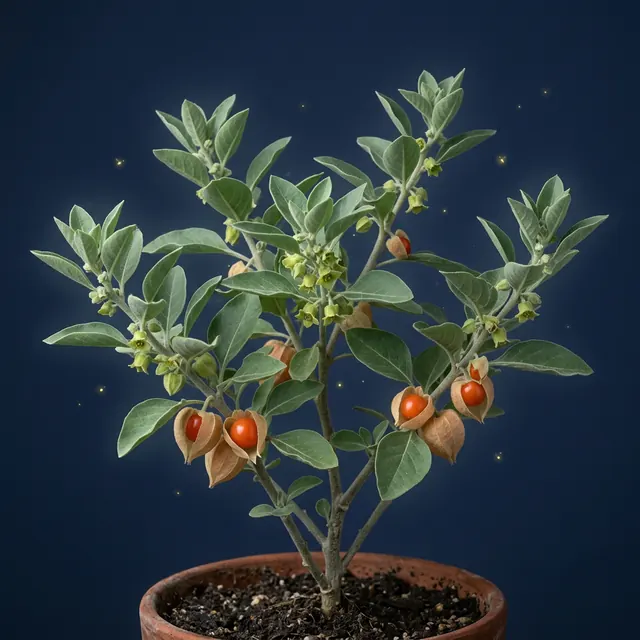
Ashwagandha
Withania somnifera (L.) Dunal
Polish folk names: ashwagandha, żeń-szeń indyjski, śpioszyn lekarski, wiśnia zimowa
Traditional use
In Ayurvedic medicine the root is regarded as an adaptogen, that is, a remedy for stress and fatigue. In placebo-controlled studies, extracts slightly reduced perceived stress and anxiety and slightly improved sleep, but the studies are small and short, and the evidence is considered uncertain. Other promised effects (immunity, fertility, memory) have not been confirmed in humans. There is no EMA monograph: the HMPC committee has issued only a position, without a monograph.
What it looks like
Low shrub 35–75 cm tall with felty-hairy shoots. Leaves matt green, elliptical, up to 10–12 cm. Flowers small, greenish, bell-shaped. The fruit is an orange-red, round berry hidden in an inflated, papery calyx. Root pale beige, with a “horsey” smell.
Harvest
Gathered: root.
Form: powder, capsules (supplement).
Lookalikes
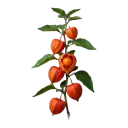
- Chinese lantern: also from the nightshade family, with an orange “lantern” around the fruit, but the lantern is large and colourful, and the leaves are not felty
- Bittersweet nightshade and other nightshades with red berries: poisonous – do not eat berries from the garden
The information is educational and describes traditional use according to EMA/HMPC monographs (the European Medicines Agency and its Committee on Herbal Medicinal Products).It does not replace the advice of a doctor or pharmacist. Never eat a plant you are not 100% sure you recognise.