

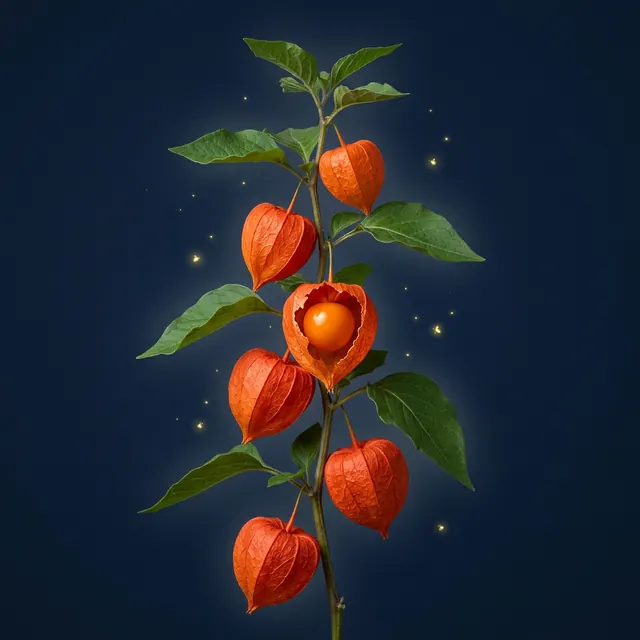
Chinese lantern
Physalis alkekengi L. (syn. Alkekengi officinarum Moench)
Polish folk names: garliczka, pęcherznica
Traditional use
An ornamental plant, grown for its orange “lanterns”. In the folk medicine of Europe and China the ripe fruit was regarded as a strong diuretic, used for “gravel” in the urine, gout and fever, and the herb for cough. It contains, among other things, physalins, which show antibacterial activity in laboratory studies. Rarely used today; there is no EMA monograph and there are no clinical studies.
What it looks like
Perennial up to 40–60 cm (up to 1 m) with a rhizome. Leaves ovate, entire. Solitary, drooping, off-white flowers. After flowering the calyx grows into a large, inflated, papery “lantern” 4–5 cm long, vermilion-red, hiding an orange or scarlet berry the size of a cherry.
Harvest
Gathered: ripe fruit without the calyx.
When: September – October.
Form: fresh or dried fruit, infusion of dried fruit.
Lookalikes
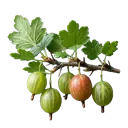
- Cape gooseberry (physalis with yellow fruit) – edible, straw-coloured calyx
- bittersweet nightshade – red berries without a papery husk; poisonous
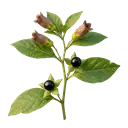
- deadly nightshade – black berries; very poisonous
The information is educational and describes traditional use according to EMA/HMPC monographs (the European Medicines Agency and its Committee on Herbal Medicinal Products).It does not replace the advice of a doctor or pharmacist. Never eat a plant you are not 100% sure you recognise.