

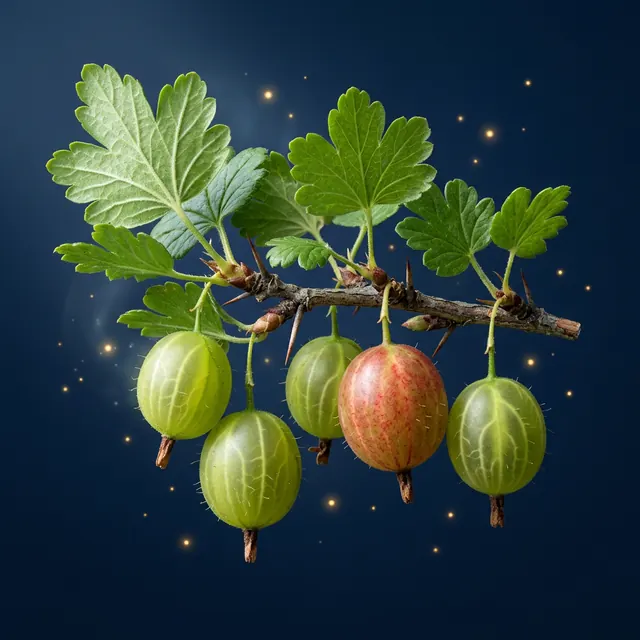
Gooseberry
Ribes uva-crispa L.
Polish folk names: agrest
Traditional use
An edible fruit, raw and preserved; 100 g contains about 26 mg of vitamin C and 3 g of fibre. In folk medicine the fruit was considered mildly laxative, stewed unripe fruit was eaten in spring “for cleansing”, and an infusion of the tannin-rich leaves was used for diarrhoea and wounds. There is no EMA monograph and there are no clinical studies.
What it looks like
Shrub, 0.5–1.5 m, with thorns at the base of the leaves (single or three-pronged). Leaves 3–5-lobed, crenate. Small, drooping flowers with reflexed sepals, 1–3 together. The fruits are large berries, green, yellow or reddish, often with translucent veins and glandular hairs.
Harvest
Gathered: fruit, leaf.
When: June – July.
Form: fresh fruit, compote, jam, preserve (kitchen), infusion of the leaves.
Lookalikes
- currants – no thorns; harmless
- barberry – thorny, but the fruit is oblong, red, in clusters; harmless
The information is educational and describes traditional use according to EMA/HMPC monographs (the European Medicines Agency and its Committee on Herbal Medicinal Products).It does not replace the advice of a doctor or pharmacist. Never eat a plant you are not 100% sure you recognise.