

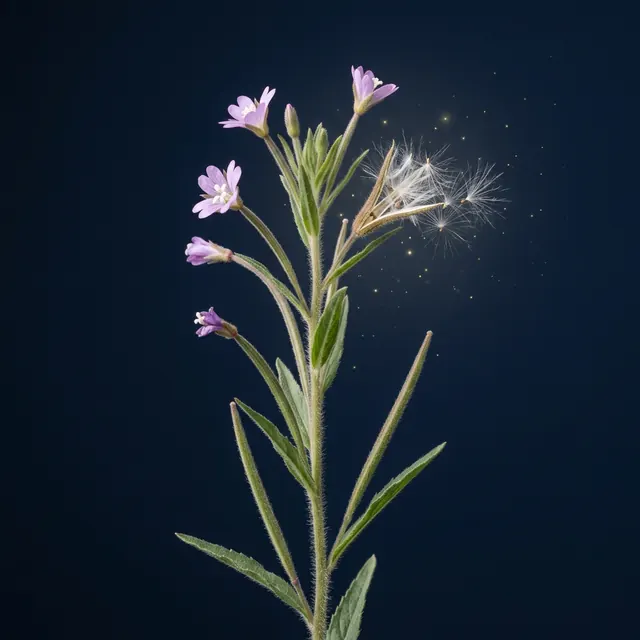
Small-flowered willowherb
Epilobium parviflorum Schreb.
Traditional use
Traditionally (EMA/HMPC, herb, together with rosebay willowherb) in men with benign prostatic hyperplasia to relieve lower urinary tract symptoms (difficulty starting urination, frequent urge), after serious diseases have been ruled out by a doctor. No clinical studies.
What it looks like
Plant 20–80 cm tall, in ditches and by water. Stem round, hairy toward the top. Leaves narrowly lanceolate, up to 7 cm, weakly toothed, sessile, the lower ones opposite. Small flowers solitary in the axils of the upper leaves: 4 light purple petals 6–10 mm, heart-shaped notched, stigma four-lobed, with a long, four-angled false ovary beneath the flower. Seed capsules with fluff.
Harvest
Gathered: herb (aerial parts).
When: June – August.
Form: infusion.
Lookalikes
- broad-leaved willowherb - broader, distinctly serrated leaves; harmless
- other willowherbs - hybridise easily, hard to tell apart; harmless
- purple loosestrife - 6-petalled flowers in long spikes; harmless
The information is educational and describes traditional use according to EMA/HMPC monographs (the European Medicines Agency and its Committee on Herbal Medicinal Products).It does not replace the advice of a doctor or pharmacist. Never eat a plant you are not 100% sure you recognise.