

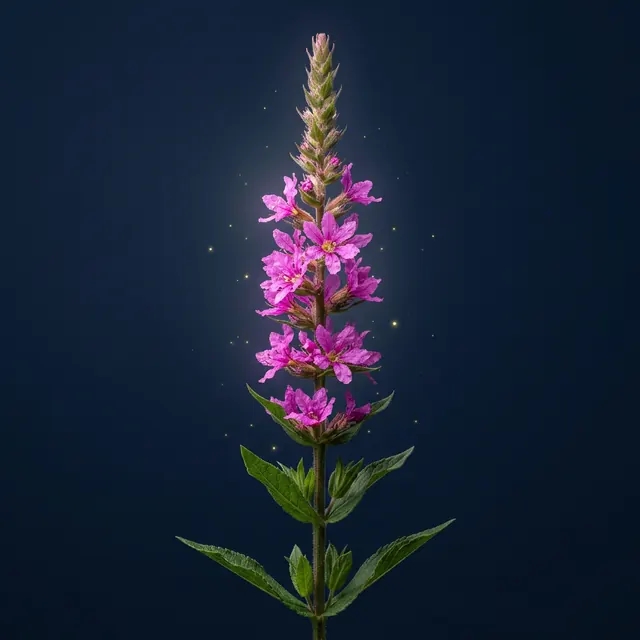
Purple loosestrife
Lythrum salicaria L.
Traditional use
No EMA monograph. Purple loosestrife herb is a pharmacopoeial raw material rich in tannins. In European folk medicine used as an astringent, mainly for diarrhoea and other digestive complaints. A 2015 review states that modern research is still insufficient to confirm these uses.
What it looks like
Perennial 50–130 cm tall by water and in wet meadows. Stem angular, hairy. Leaves lanceolate, sessile, opposite or in whorls of 3. Carmine-pink flowers with 6 petals in dense spikes up to 30 cm long at the tips of the shoots, opening from the bottom upward.
Harvest
Gathered: herb (flowering tops of shoots).
When: June – August.
Form: infusion, decoction.
Lookalikes
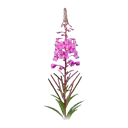
- rosebay willowherb - 4-petalled flowers in a raceme, alternate leaves; harmless
- willowherbs - 4-petalled flowers singly in the leaf axils; harmless
The information is educational and describes traditional use according to EMA/HMPC monographs (the European Medicines Agency and its Committee on Herbal Medicinal Products).It does not replace the advice of a doctor or pharmacist. Never eat a plant you are not 100% sure you recognise.