

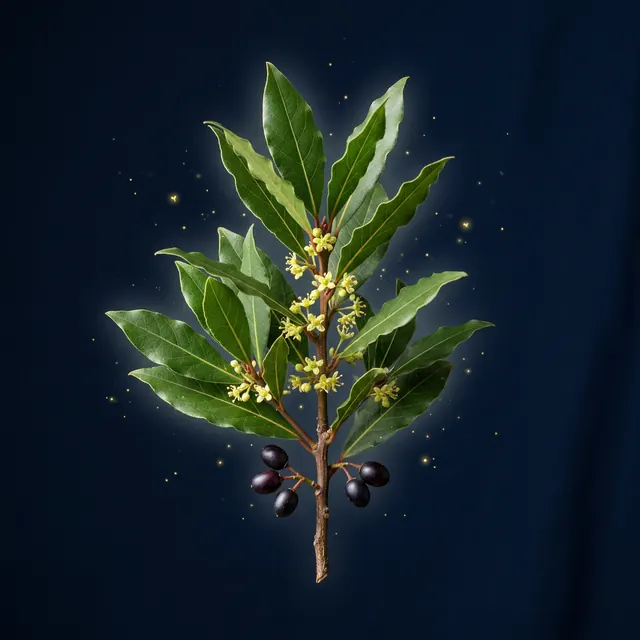
Bay laurel – bay leaf
Laurus nobilis L.
Polish folk names: laur, liść laurowy, liść bobkowy, wawrzyn
Traditional use
Dried leaves are a spice for bigos, soups, stews and marinades. In the past a tincture and oil were rubbed in externally for rheumatic pains and skin diseases. There are no clinical studies and no EMA monograph.
What it looks like
Evergreen shrub or tree. Leaves leathery, lanceolate, 6–12 cm, entire, often wavy at the margin, aromatic when crushed. Small yellowish flowers, several together in the leaf axils (March–April). The fruits are dark, shiny berries.
Harvest
Gathered: leaf, fruit.
Form: spice.
Lookalikes
- Cherry laurel (Prunus laurocerasus): POISONOUS, planted as hedges and in cemeteries. Larger leaves (up to 20 cm), thick, glossy, and white flowers in upright clusters; it contains a glycoside that releases hydrogen cyanide
- Oleander: a poisonous pot shrub with narrow, leathery leaves in whorls
The information is educational and describes traditional use according to EMA/HMPC monographs (the European Medicines Agency and its Committee on Herbal Medicinal Products).It does not replace the advice of a doctor or pharmacist. Never eat a plant you are not 100% sure you recognise.