

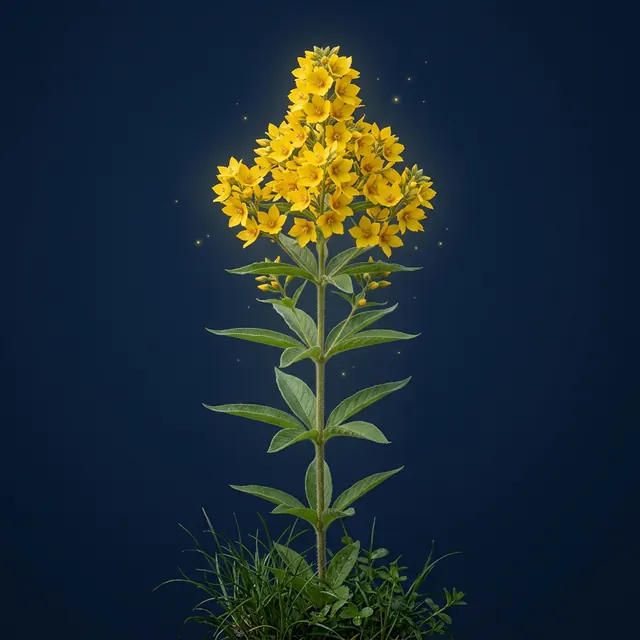
Yellow loosestrife
Lysimachia vulgaris L.
Polish folk names: bażanowiec, gruszka Matki Boskiej, francowate ziele
Traditional use
In folk medicine the herb was used as a diuretic and anti-inflammatory, for fever, wounds, ulcers and diarrhoea. It was also used for baths and hair care, and dyes for colouring fabrics were obtained from the leaves and roots. There is no EMA monograph or clinical studies in Europe.
What it looks like
Perennial 50–150 cm tall, found by waters and in wetlands, with long underground stolons. Leaves ovate-lanceolate, up to 14 cm, opposite or in whorls of 3–4, with dotted glands. Golden-yellow flowers about 1 cm in terminal panicles, the calyx lobes with a distinct orange-red margin.
Harvest
Gathered: herb (aerial parts).
When: June – August.
Form: infusion, bath, hair rinse.
Lookalikes
- dotted loosestrife – four-angled glandular stem, petals without red margins, with a fringed edge; harmless
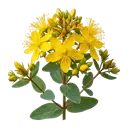
- St John's wort – also has yellow flowers and dotted leaves, but is lower, with numerous stamens in bundles; harmless
The information is educational and describes traditional use according to EMA/HMPC monographs (the European Medicines Agency and its Committee on Herbal Medicinal Products).It does not replace the advice of a doctor or pharmacist. Never eat a plant you are not 100% sure you recognise.